我就是想要活下去这有错吗 难道你们不想活下去吗
“is there anything wrong with me wanting to survive? Don't you two want to survive?”
THE DIALOGUE REEL
不是
“But”
我就是想 要 活下去 这 有错吗 难道 你们 不想 活下去 吗
“is there anything wrong with me wanting to survive? Don't you two want to survive?”
我们当然想啊
“Of course we do.”
Direct spoken expression in this communicative setting.
In traditional Chinese narratives, choosing individual survival over collective duty or righteousness often invites shame, prompting passionate defensive appeals to basic human nature.
LEARNING CHUNKS & PARTICLES
to keep living; to survive
A directional complement construction emphasizing continuation of life through hardship.
could it be that; do you mean to say
An adverb used to introduce rhetorical questions, placing heavy rhetorical pressure on the listener.
Turns the statement into a sharp rhetorical question challenging the listeners' stance.
VOCABULARY & EXPRESSIONS
Parallel Spoken Cinema Scenes (语义近邻切片)

“because you wanted me to live, right?”

“I just wanted to survive.”

“What's wrong with me wanting to survive?”
“I don't even want to live anymore!”
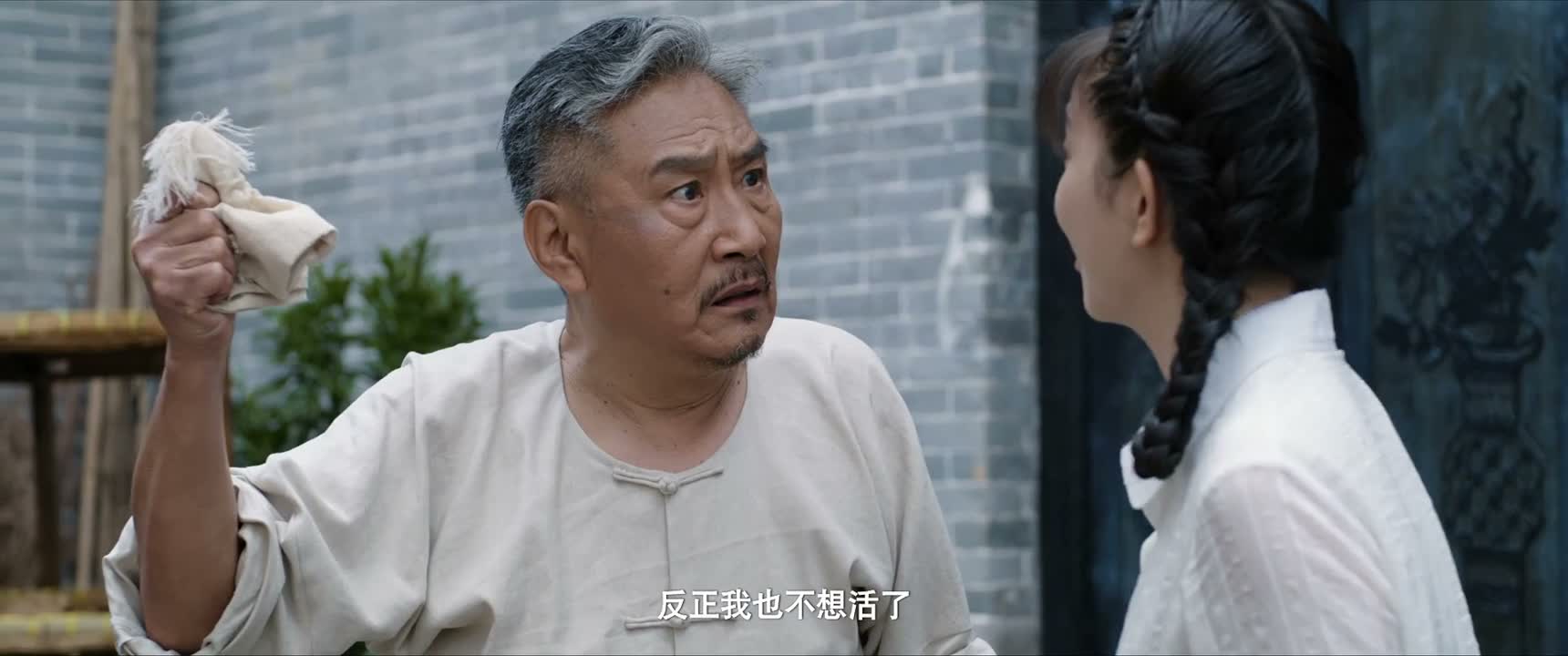
“I don't want to live anyway.”

“I shouldn't live like this.”