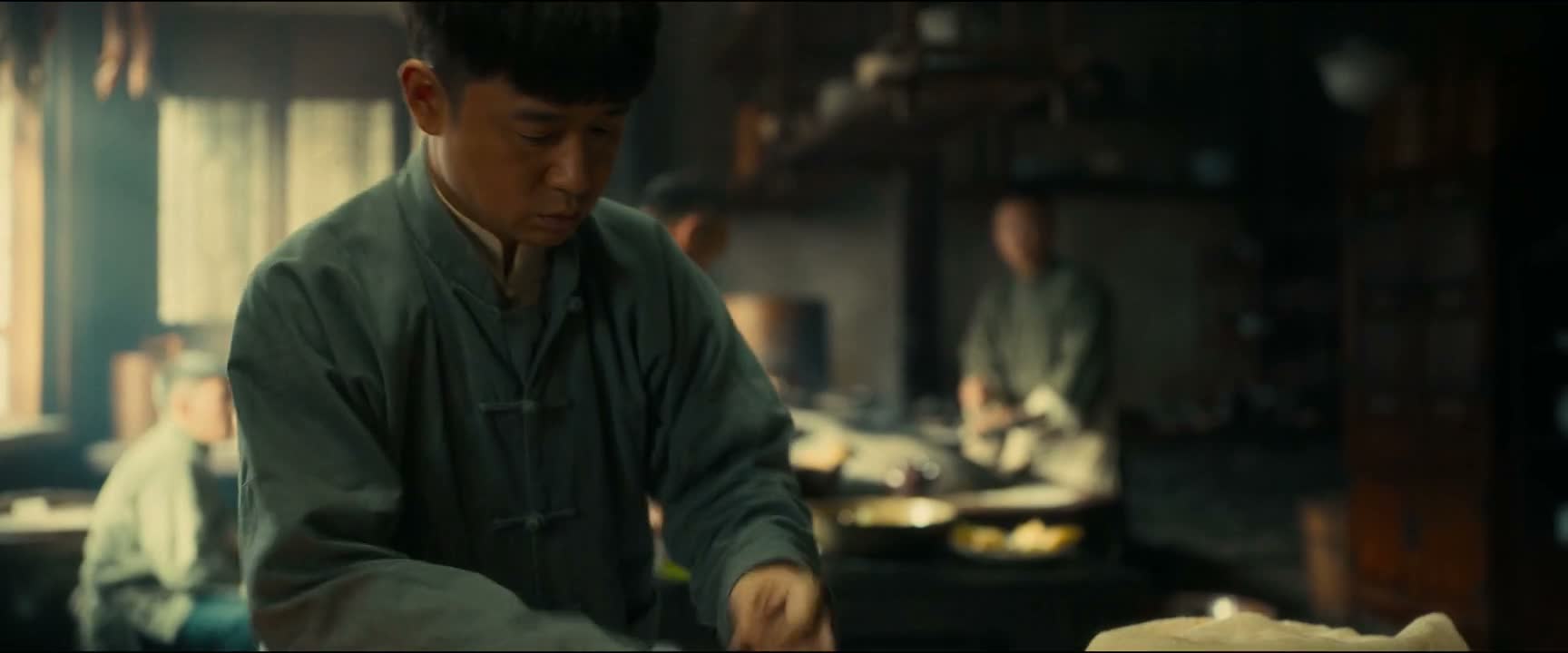
谁知道呢 干活 挨打
“Who knows? Working, getting beaten...”
THE DIALOGUE REEL
这伤咋弄的
“How were you injured?”
谁知道呢 干活 挨打
“Who knows? Working, getting beaten...”
不知道咋就弄上了
“I have no idea.”
“It does not matter how it happened; suffering is just my daily routine, so do not dwell on it.”
Traditional apprentices and manual laborers often accept physical punishment and hardship as standard conditions, leading them to discuss trauma with nonchalance.
LEARNING CHUNKS & PARTICLES
who knows?; beats me
Use this phrase to casually brush off a question when you either do not know the answer or do not care to explain.
to get beaten; to take a beating
Composed of the passive verb '挨' (suffer/endure) and '打' (hit), used colloquially to describe receiving physical punishment.
Softens the rhetorical question 'who knows', projecting casual indifference or mild perplexity.
VOCABULARY & EXPRESSIONS
Parallel Spoken Cinema Scenes (语义近邻切片)

“- Time to get back to work. - We still have questions for you.”

“Wait. Get to work. Wait for me.”

“Work is work regardless of location. Nothing to get used to.”

“Get up. Get to work.”

“What are you doing? Here”
“What time is it? What are you chatting about here? Work. We are working.”