不是 你们拿娃开啥玩笑呢嘛
“Hey, why are you joking with the kid?”
THE DIALOGUE REEL
“What? You'll be my boss from now on.”
不是 你们 拿娃开啥玩笑 呢嘛
“Hey, why are you joking with the kid?”
“She's now famous all over Beishan as the Little Queen of Qinqiang Opera.”
“Stop flattering the kid like that, she is still young and you are embarrassing her!”
In Chinese culture, when a younger family member or apprentice is praised or teased about high status, elders often step in to brush it off as 'just a joke' to maintain humility and protect the youth from arrogance.
Referring to a young person as 'wa' (child) and stacking particles at the end of a sentence are classic markers of Shaanxi/Northwestern Chinese culture, closely tied to Qinqiang opera traditions.
LEARNING CHUNKS & PARTICLES
Wait a minute / Hold on / Come on
At the start of a conversational turn, '不是' does not mean 'it is not'; it acts as a discourse marker to express mild disagreement, surprise, or to brush off a joke.
why are you making fun of the kid / teasing the child
Uses the structure '拿 + Somebody + 开玩笑' (to make a joke at someone's expense), with Northwestern dialectal words '娃' (kid) and '啥' (what).
Marks an ongoing action and softens the rhetorical question.
Stacked after '呢' (characteristic of Northwestern Mandarin) to add a tone of friendly reproach and familiarity.
VOCABULARY & EXPRESSIONS
Parallel Spoken Cinema Scenes (语义近邻切片)

“Why are you joking with the kid?”

“Please, don't tease a kid like that.”
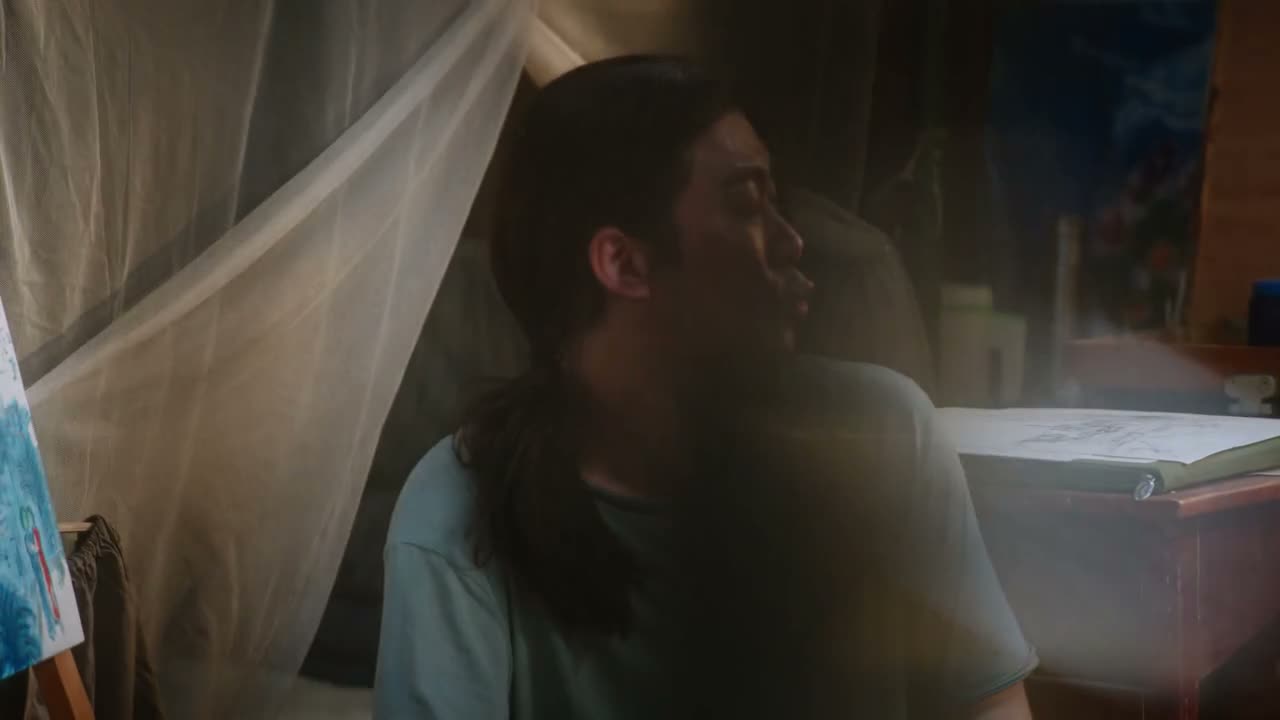
“I was just joking.”

“Who jokes about something like this?”