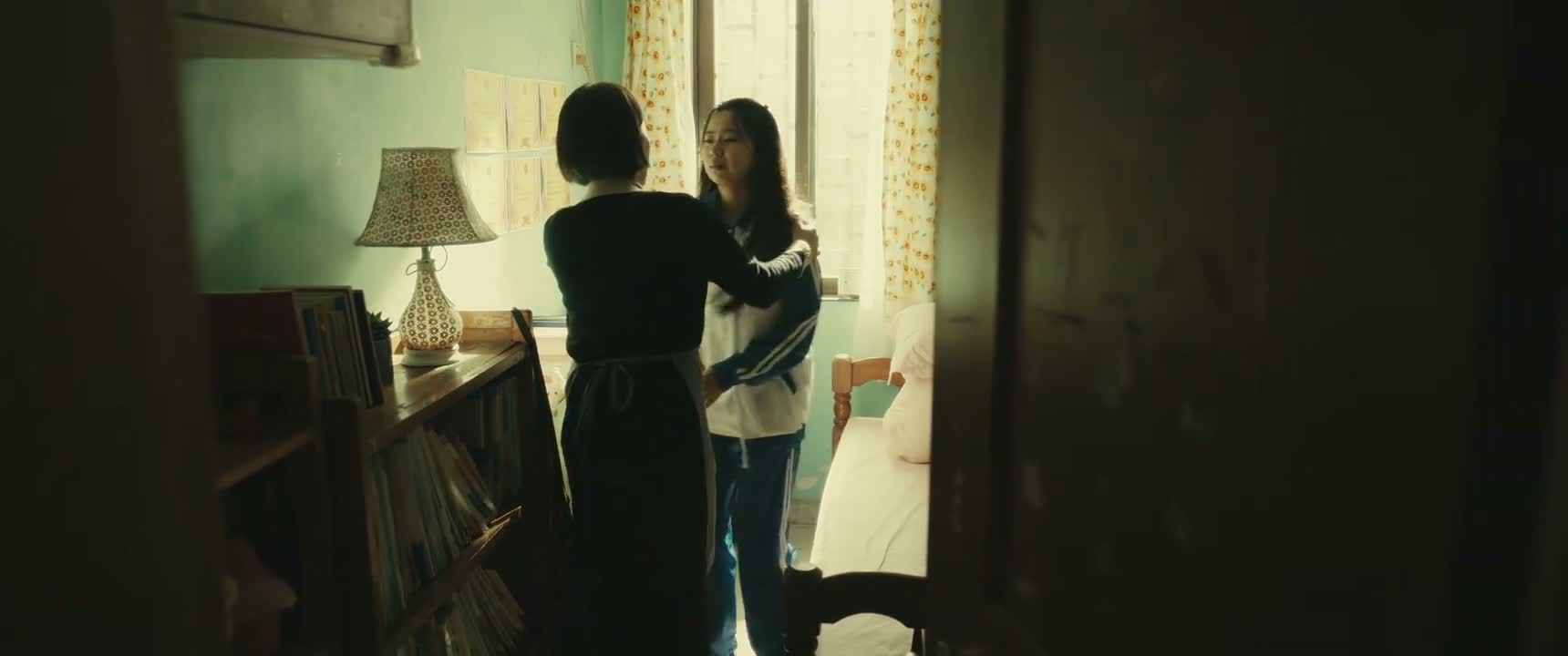
妈 你别说我爸 是我让他出去办的
“Mom, don't blame Dad. I asked him to do it.”
THE DIALOGUE REEL
“Who told you to rush it? Shouldn't she stay longer?”
妈 你别说 我爸 是我 让他出去 办的
“Mom, don't blame Dad. I asked him to do it.”
“I'm worried about all the work piling up. I need to get back.”
“Leave Dad alone; I forced him to check me out because I have to get back to work.”
Chinese adult children often intervene to ease parental disputes, while public officials frequently feel compelled to cut medical recovery short to fulfill their public duties.
LEARNING CHUNKS & PARTICLES
don't scold my dad / don't blame my dad
In colloquial spoken Chinese, '说' frequently means 'to criticize', 'to scold', or 'to nag'.
it was me who asked him to
An emphatic '是...的' cleft construction used to step forward and claim responsibility for an action.
VOCABULARY & EXPRESSIONS
Parallel Spoken Cinema Scenes (语义近邻切片)

“Dad, calm down. Mom isn't serious.”

“Don't worry, Dad. If Mom wanted to apply for a mortgage,”

“Mom, please ask her to wait.”

“you can't tell Mom about this. If you don't tell Mom about me,”

“Mom, stop pushing him, please! Are you done talking?”
“Mom, don't look.”