你不是说 你什么牛头马面 都见过吗
“Didn't you say you've seen all kinds of cows and horses?”
THE DIALOGUE REEL
提神
“It's refreshing.”
你不是说 你 什么 牛头马面 都 见过吗
“Didn't you say you've seen all kinds of cows and horses?”
“How could you be scared like this? Yes, yes.”
“You talked big about being fearless, so why are you trembling now?”
In Chinese social interactions, exposing a discrepancy between someone's boasting and reality is a direct blow to their mianzi (face), often used deliberately in verbal sparring.
LEARNING CHUNKS & PARTICLES
didn't you say...
Commonly used to point out a contradiction between what someone previously claimed and reality.
ox-head and horse-face; all sorts of terrifying figures/monsters
An idiom originating from Buddhist underworld guardians, used figuratively to refer to all kinds of wicked or bizarre characters.
Turns the rhetorical premise into a provocative challenge.
VOCABULARY & EXPRESSIONS
Parallel Spoken Cinema Scenes (语义近邻切片)

“I've seen all kinds of weird "cows and horses".”

“You've got to admit, I'm awesome, right? Awesome. You're the best.”

“Calling me a donkey flatters me.”

“Do you have a cow here? No. Does anyone have a cow?”
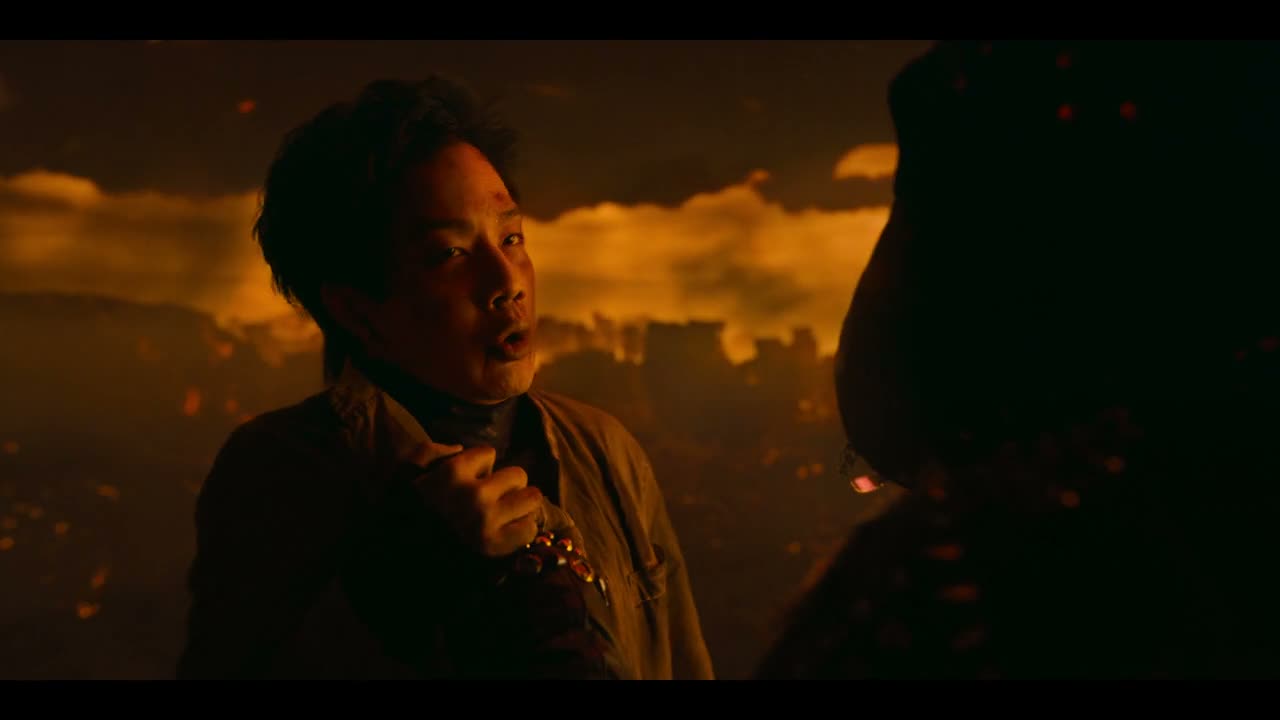
“Ox Head? Then this is…”

“To say that you're as much of a corporate slave as I am?”