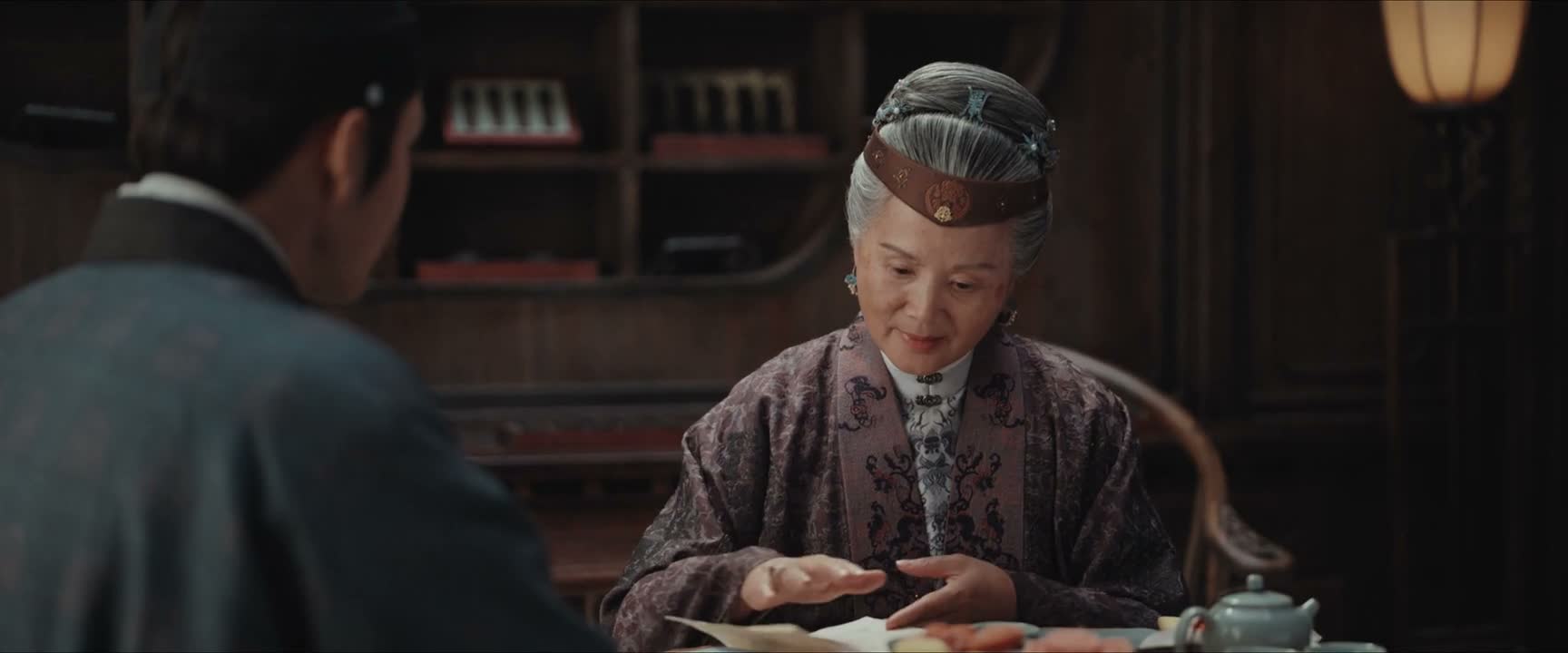
戚东家已经下狱了
“Master Qi has been imprisoned.”
THE DIALOGUE REEL
你回来了 府衙有消息了吗
“You are back. Is there any news from the prefectural office?”
戚 东家 已经 下狱 了
“Master Qi has been imprisoned.”
终究还是走到这一步了 婆婆 有人要见你 你稍等
“It has come to this after all. Granny, someone wants to see you. Wait a moment.”
Direct spoken expression in this communicative setting.
In traditional Chinese society, being thrown into a government jail often meant arbitrary punishment or torture before trial, making it a source of severe dread.
LEARNING CHUNKS & PARTICLES
proprietor; master; employer
A traditional Chinese term for the owner or boss of a shop or household, often encountered in historical dramas.
to be put into prison; to be imprisoned
A formal or literary term referring to imprisonment by judicial authorities in historical contexts.
Marks a change of state, underscoring that the imprisonment has already become a grim reality.
VOCABULARY & EXPRESSIONS
Parallel Spoken Cinema Scenes (语义近邻切片)

“Master Qi was just imprisoned, and the Tian family couldn't sit still.”

“Master Qi, what do you mean by this?”

“Master Qi is truly open-handed!”

“Master Qi, you truly understand the way of business.”

“I'm so flattered, Master Qi. This is just the beginning.”
“Master Qi, you are so sincere.”