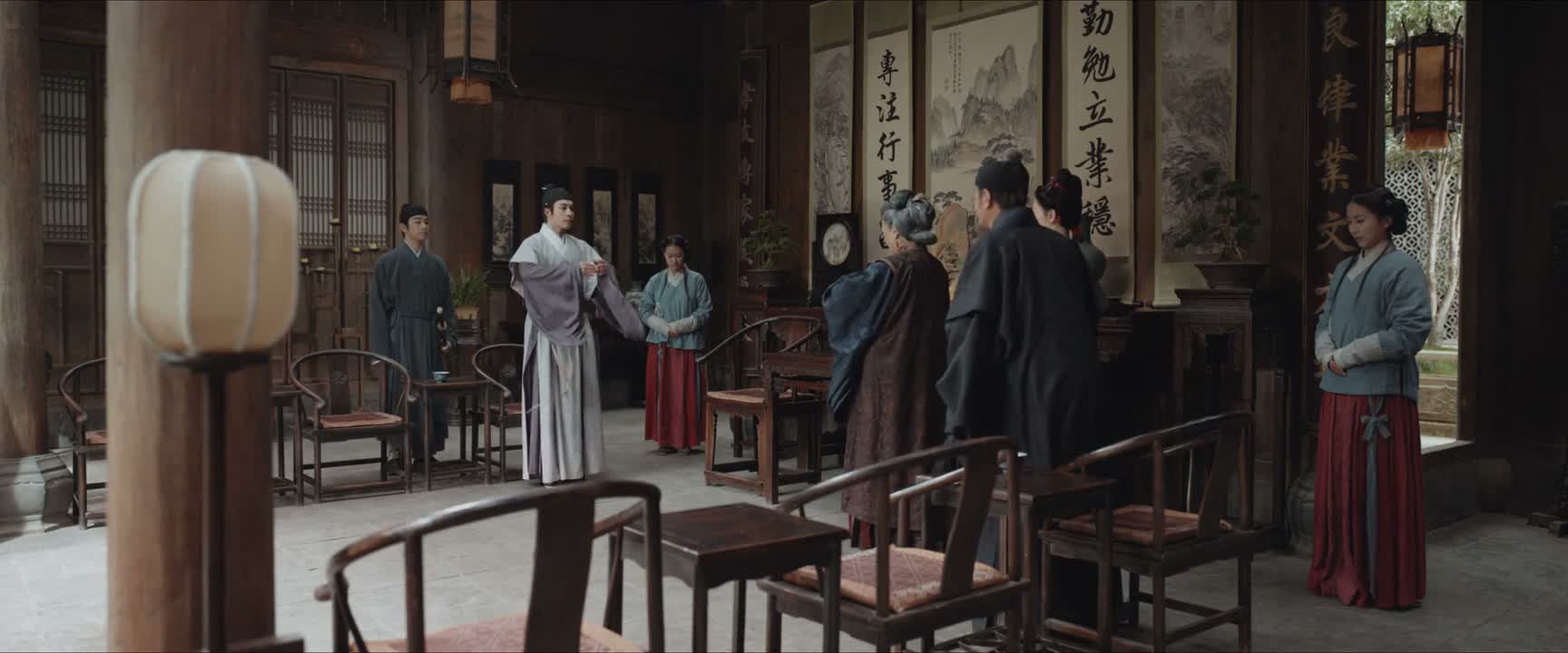
有礼了 戚东家为何在此处啊
“Greetings to you. Master Qi, why are you here?”
THE DIALOGUE REEL
有礼了
“say my greetings.”
有礼了 戚 东家 为何 在此处啊
“Greetings to you. Master Qi, why are you here?”
戚某奉戚帅之命来南京办事
“I came to Nanjing on the order of Marshal Qi”
Direct spoken expression in this communicative setting.
Traditional Chinese etiquette requires verbal formulas paired with physical bows to acknowledge social distance and show mutual respect before asking personal questions.
LEARNING CHUNKS & PARTICLES
greetings / I pay my respects
A traditional, polite greeting accompanied by a bow or hand clasp, common in historical or period dramas.
why are you here
A formal and literary way to ask someone what brings them to a specific location.
Softens the interrogative tone, making the inquiry sound gentle rather than accusatory.
VOCABULARY & EXPRESSIONS
Parallel Spoken Cinema Scenes (语义近邻切片)

“Master Qi, whom you've met before. He suddenly disappeared.”

“Master Qi has got a point.”

“Of course, Master Qi's blade helped me a lot.”

“Master Qi, do you really not know who got me into this situation?”

“Thank you for your hard work, both of you. You did well, Master Qi.”
“Thank you again, Master Qi.”