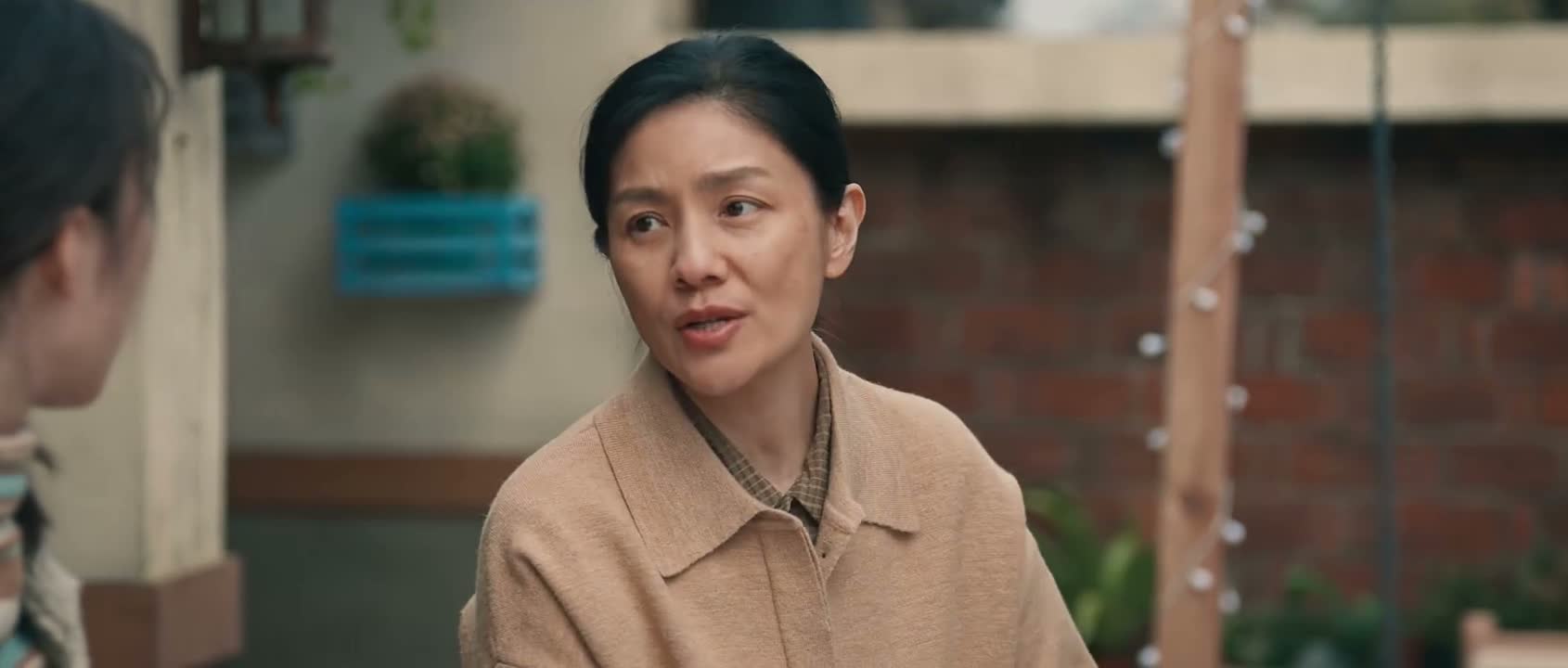
想二叔了没有 想了 就知道你想我
“Did you miss me? Yes. I knew you missed me.”
THE DIALOGUE REEL
佳 来了 你看 二叔 佳佳
“Jia! Coming. Look. Uncle. Jiajia.”
想 二叔 了没有 想 了 就知道你想我
“Did you miss me? Yes. I knew you missed me.”
给你带的吃的
“I brought you some snacks.”
Direct spoken expression in this communicative setting.
Chinese relatives routinely refer to themselves in the third person by their specific generational title (e.g., Ershu) to reinforce family bonds.
LEARNING CHUNKS & PARTICLES
did you miss your second uncle?
A typical affirmative-negative question format used affectionately by older relatives towards young children.
I knew it; just as expected
Used playfully to confirm one's own assumptions with warmth.
Marks the completed realization of missing someone and confirms the emotional state.
VOCABULARY & EXPRESSIONS
Parallel Spoken Cinema Scenes (语义近邻切片)

“Did you tell Second Uncle? I did! Of course. Let's go. Come on.”

“He's truly glad your father has someone to carry on his legacy.”

“Sister, do you want to know something about my Uncle Dajun? I'm not interested.”

“Second Uncle, I used to think you didn't train me or value me.”

“You always think of everything, Uncle.”
“Hui's dad and I talked it over.”