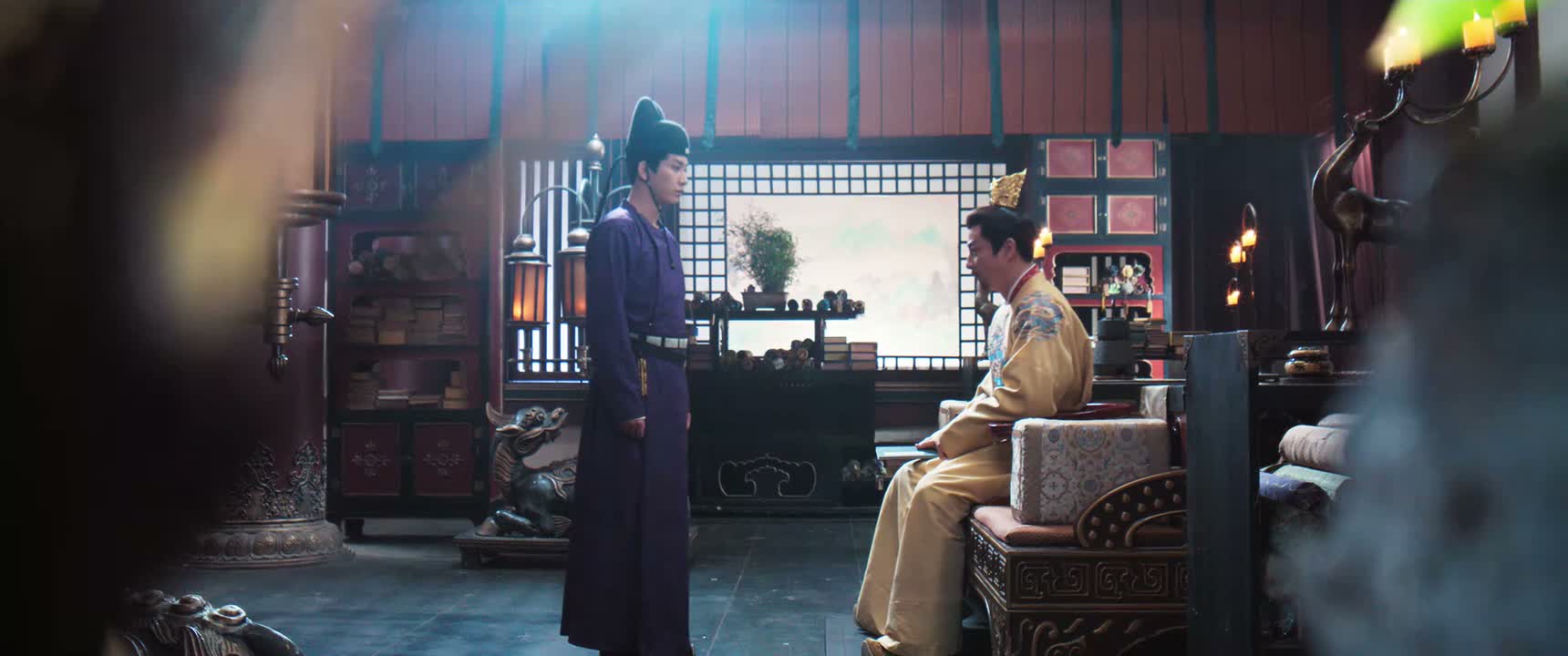
怎么会搞出这么多阴谋诡计呢?
“How could he devise so many plans?”
THE DIALOGUE REEL
“Wu Shanlong isn't smart.”
怎么会 搞出 这么多 阴谋诡计 呢 ?
“How could he devise so many plans?”
赵姐 出来了 赵姐 你气质真的好好
“Ms. Zhao, you're out. Ms. Zhao, you look so beautiful.”
“There must be someone else pulling the strings behind him; he's nowhere near smart enough to pull this off.”
A common northern dialect and colloquial expression meaning someone is slow to react, not very smart, or lacking scheming ability; using this as a premise often reflects a preconceived bias.
LEARNING CHUNKS & PARTICLES
Refers to sinister plots, underhanded tricks, or conspiracies (derogatory).
Commonly used in spoken and written Chinese to accuse someone of scheming or using improper means, frequently paired with verbs like 'gao', 'wan', or 'shua'.
Expresses a rhetorical question or strong doubt, emphasizing that a situation is unexpected or contrary to common sense.
A common spoken rhetorical pattern used to intensify skepticism or disbelief.
Used at the end of a rhetorical question to intensify probing, doubt, and disbelief.
VOCABULARY & EXPRESSIONS
Parallel Spoken Cinema Scenes (语义近邻切片)
“Now that their schemes are exposed,”

“Tell me your scheme.”

“Because the success rate of overt schemes is much lower than covert ones.”

“why are covert schemes used more than overt ones?”

“would resort to such cruel tricks”

“all while scheming tricks, aren't you?”