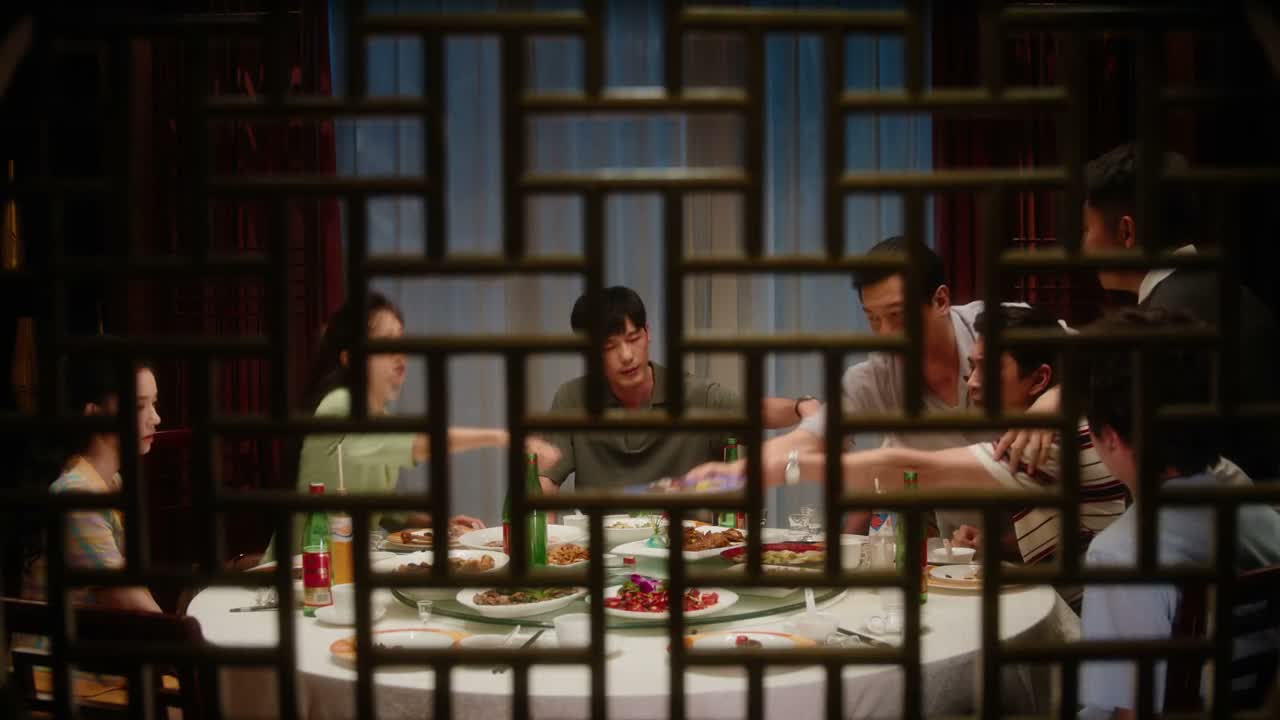
好了 好了 我就直说了
“Alright. I'll be blunt.”
THE DIALOGUE REEL
应该也不相信 我们会放弃这次机会吧
“you probably didn't believe we'd give up this chance.”
好了 好了 我就 直说了
“Alright. I'll be blunt.”
我们是想赢
“We do want to win,”
“Alright, enough beating around the bush—I'll just lay our cards on the table.”
In Chinese business or team communication, people often start with polite pleasantries or indirect probing. Saying 'zhi shuo le' (speaking frankly) signals a deliberate departure from subtle social etiquette to transition into direct, pragmatic communication where one lays all cards on the table.
LEARNING CHUNKS & PARTICLES
all right, that's enough; used to cut off preamble or arguments and change the topic
A high-frequency colloquial repeated expression commonly used to stop someone from speaking or wind down small talk to introduce the main point.
to speak frankly and bluntly without beating around the bush
Frequently used as a transitional formula before laying out one's true thoughts or having a showdown, as in 'wo jiu zhi shuo le ba' (I will just put it bluntly).
Indicates a change of state or an imminent action, here emphasizing the speaker's firm decision to get straight to the point.
VOCABULARY & EXPRESSIONS
Parallel Spoken Cinema Scenes (语义近邻切片)

“Okay, let's not talk about that.”

“Alright, alright. Let's not talk about this anymore.”

“Alright, alright. Let's not talk about it. Let's not.”

“Alright, alright. We don't want to know what you're doing.”
“All right, all right.”

“Alright, enough. Stop adding more.”