那伺候病人 怎么能糊弄呢
“How can you make do with it when looking after a patient?”
THE DIALOGUE REEL
那 伺候 病人 怎么能 糊弄 呢
“How can you make do with it when looking after a patient?”
这样
“Fine.”
“How could you even suggest cutting corners when it comes to taking care of a sick person?”
Originally meaning to wait upon or serve someone, in modern everyday domestic contexts it often refers to attentively caring for a family member's daily living and health, embodying traditional Chinese filial piety and familial duty.
LEARNING CHUNKS & PARTICLES
to nurse or care for a sick person
A common colloquial phrase. 'cihou' refers to attentively looking after someone's daily life and meals, typically used for taking care of the elderly, patients, or children.
rhetorical construction emphasizing 'how could one possibly' or 'absolutely cannot'
A fixed colloquial sentence pattern used to strongly challenge or oppose someone's view or action.
to do something perfunctorily; to muddle through carelessly
A high-frequency colloquial word, often reduplicated as 'hunong hunong' to mean doing a slapdash job.
Placed at the end of a rhetorical question to reinforce the tone of reproach or questioning, prompting the listener to reflect.
VOCABULARY & EXPRESSIONS
Parallel Spoken Cinema Scenes (语义近邻切片)

“Why is she serving the others?”

“What's wrong with that? - If you don't want, just split up! - You dare hit me?”
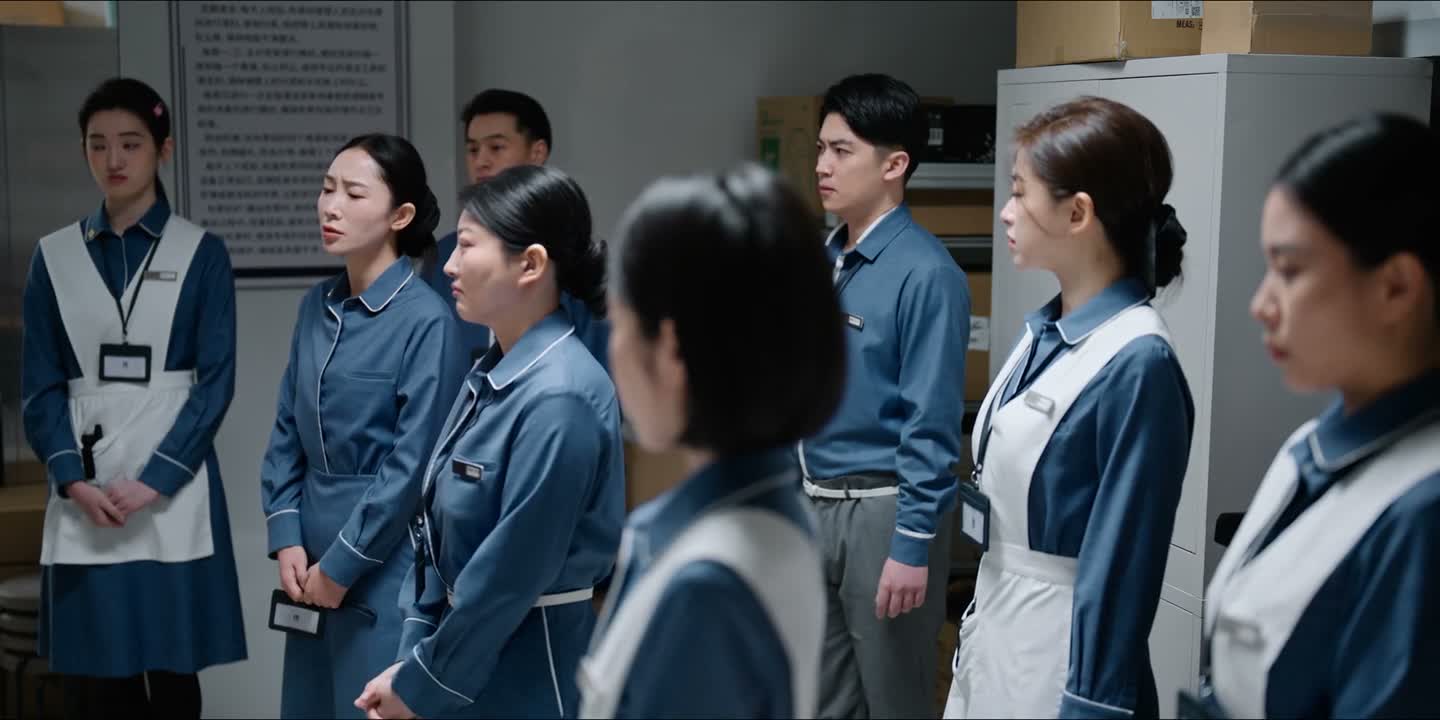
“was served by me from beginning to end, too.”

“looking after her dad in the sickbed.”

“The doctor told you, no more hosting guests. Or he'll make you pay.”

“It is still uncertain if you'll take care of me or the other way around.”