你都要出院了 但我还不知道你的名字呢
“you're about to leave the hospital, yet I still don't know your name.”
THE DIALOGUE REEL
四号床
“Bed No. 4,”
你 都要 出院 了 但 我还不知道你 的名字 呢
“you're about to leave the hospital, yet I still don't know your name.”
那等下个礼拜 我过生日约在炸鸡店
“Well, then meet me next week on my birthday at that fried chicken place.”
“Please tell me your name before you leave, because I want to stay in touch.”
In Chinese social interactions, stating 'I still don't know your name' is a conventional, polite tactic to prompt the other person to introduce themselves without asking a direct question.
LEARNING CHUNKS & PARTICLES
about to / on the verge of
Used to express an imminent action or transition that triggers an urgent feeling or follow-up action.
to be discharged from hospital
A common institutional compound verb used specifically for leaving hospital after recovery.
Softens the mild complaint or realization, giving the statement an inviting and slightly wistful tone.
VOCABULARY & EXPRESSIONS
Parallel Spoken Cinema Scenes (语义近邻切片)
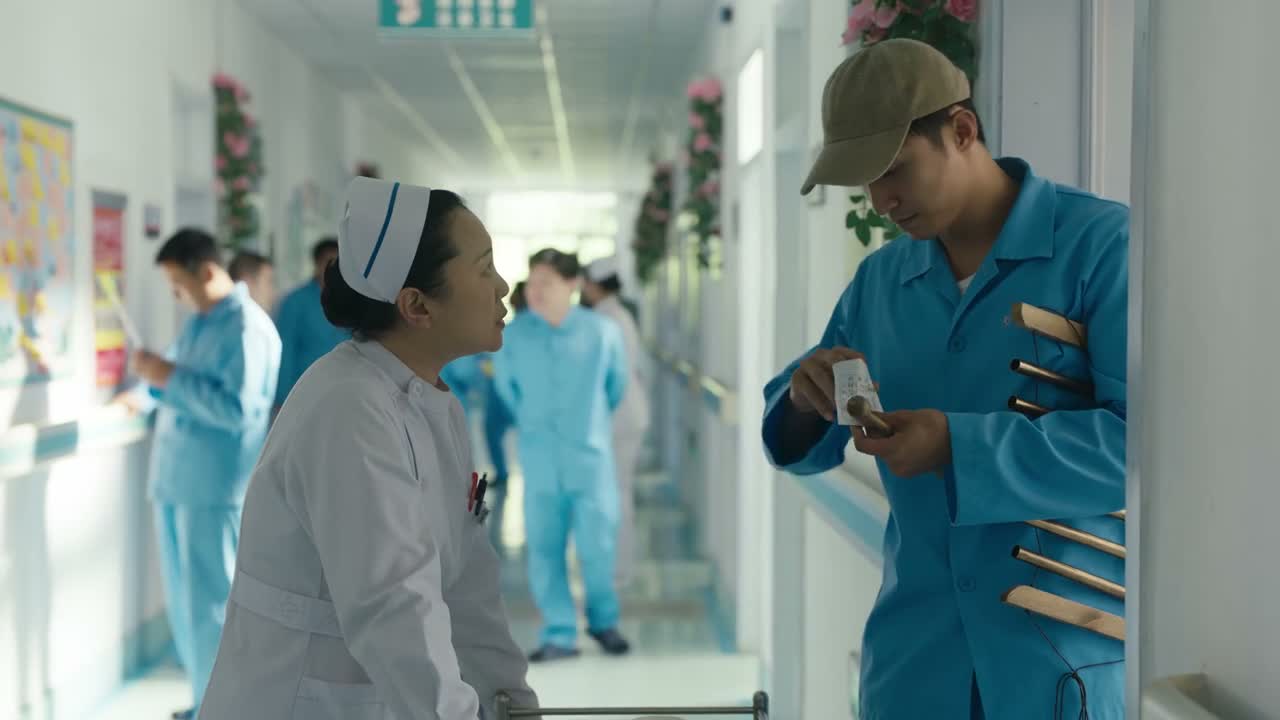
“Shouldn't you be discharged soon?”

“When she woke up this morning, she insisted on being discharged.”

“When I am discharged in a few days,”

“When were you discharged? Fully recovered?”

“She'll be discharged from hospital tomorrow. Good. Good.”

“You just got discharged.”