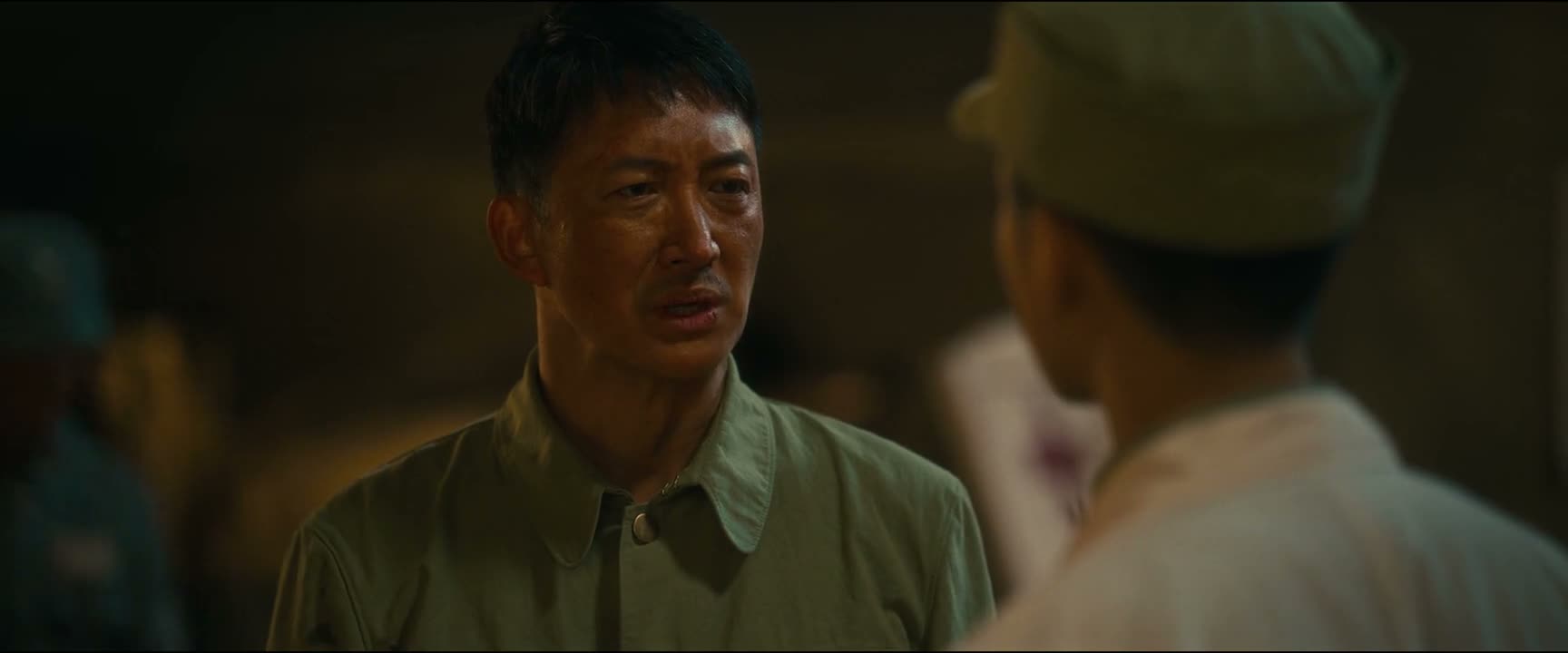
逃兵 你是当兵的 干什么你们 你是拿国家军饷的
“Deserter! You are a soldier. What are you doing? You are paid by the country!”
THE DIALOGUE REEL
“You! Traitor! Defending the country, is it worth doing this?”
逃兵 你 是 当兵 的 干什么你 们 你 是 拿国家军饷 的
“Deserter! You are a soldier. What are you doing? You are paid by the country!”
“What kind of people are they? Great-grandfather, let's go home.”
Direct spoken expression in this communicative setting.
In times of national conflict, receiving state pay (军饷) binds a soldier morally to defense, making desertion a grave moral and communal offense.
LEARNING CHUNKS & PARTICLES
soldier / serviceman
A colloquial term for someone serving in the military, sometimes used with varied nuance depending on context.
receiving state military salary / on the nation's payroll
Used to evoke civic or military obligation, implying that one must fulfill their duty because the state pays them.
VOCABULARY & EXPRESSIONS
Parallel Spoken Cinema Scenes (语义近邻切片)

“deserters are to be beheaded.”

“You are the deserter.”
“like me. They won't rest in peace.”

“If I'm not a deserter, should I be cannon fodder?”

“If you do, you're a deserter.”

“I'm close to a deserter now. You don't need a shift”