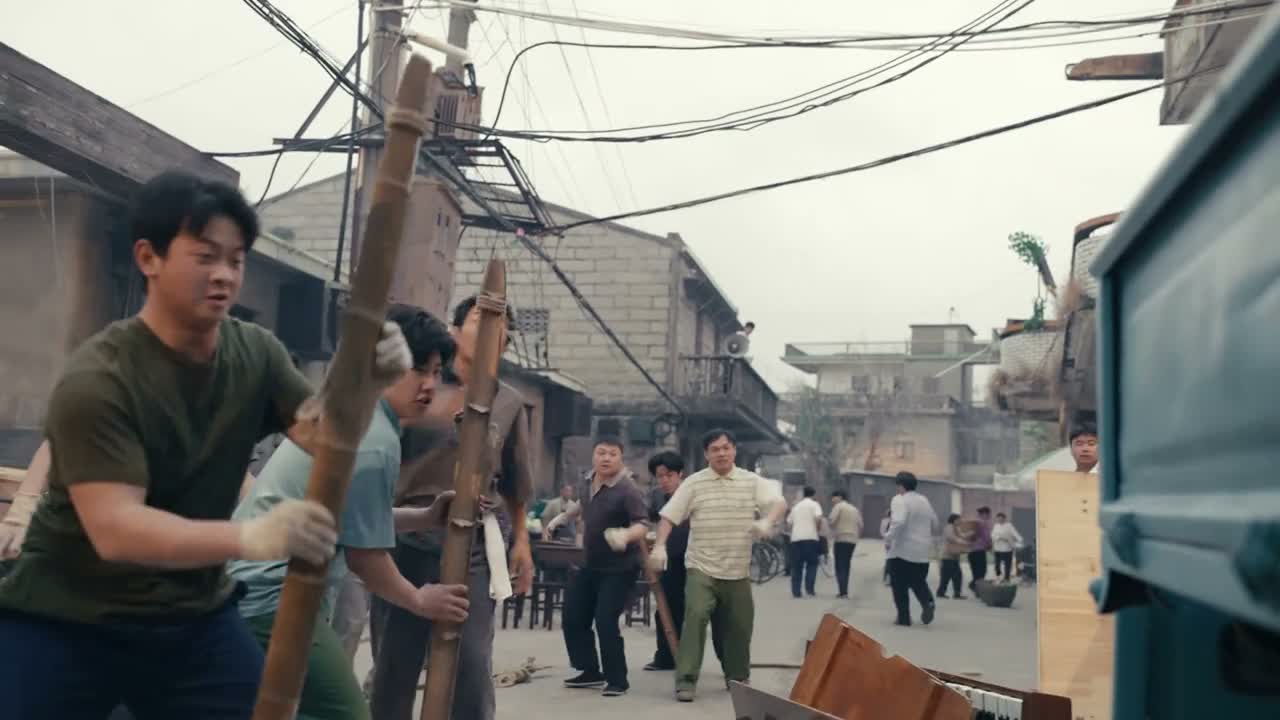
那你不好好在外面当你的野狗 你回来闹啥呀
“Then why not stay out there as a stray? Why come back?”
THE DIALOGUE REEL
“singing opera for meals where I could.”
那你 不好 好在 外面当你的野狗 你回来 闹啥呀
“Then why not stay out there as a stray? Why come back?”
“Don't steal our meal, okay? We're very protective of our food.”
“You don't belong here anymore, get lost and stop trying to take our livelihood.”
Metaphorical references to dogs protecting food reflect harsh, zero-sum competition over limited resources and territory among marginal laborers.
LEARNING CHUNKS & PARTICLES
be a wild dog; wander around aimlessly like a stray
A highly offensive, insulting spoken phrase used to belittle someone living a precarious, vagrant life outside.
what are you making trouble for?
A colloquial northern rhetorical question expressing annoyance and rejection toward someone causing a disturbance.
Intensifies the accusatory rhetorical tone in a sharp, confrontation-driven manner.
VOCABULARY & EXPRESSIONS
Parallel Spoken Cinema Scenes (语义近邻切片)

“he would be a mad dog when he came back this time.”

“like a stray dog,”

“back, and you want to kick me out right away?”

“You think you're tough?”
“Dog, have you lost your mind?”

“As expected, bastards”