你干啥呢 我等你半天 你咋还没去呢
“What are you doing? I was waiting. Why haven't you gone?”
THE DIALOGUE REEL
苟师
“Master Gou.”
你干啥呢 我 等你半天 你 咋还 没去 呢
“What are you doing? I was waiting. Why haven't you gone?”
廖师
“Master Liao.”
Direct spoken expression in this communicative setting.
Addressing colleagues as 'Shi' (abbreviated from Shifu) is typical among state-owned enterprise workers, kitchen staff, or manual craft trades, signaling mutual familiarity within a traditional master-artisan hierarchy.
LEARNING CHUNKS & PARTICLES
Waiting for you for a long time
A frequent colloquial hyperbole meaning 'a very long time' rather than literally half a day, expressing mild annoyance or impatience.
Why haven't you gone yet?
A standard northern dialect alternative to '怎么还没去', common in daily colloquial speech.
Placed at the end of the interrogative sentences to underscore current status inquiry and convey impatience.
VOCABULARY & EXPRESSIONS
Parallel Spoken Cinema Scenes (语义近邻切片)
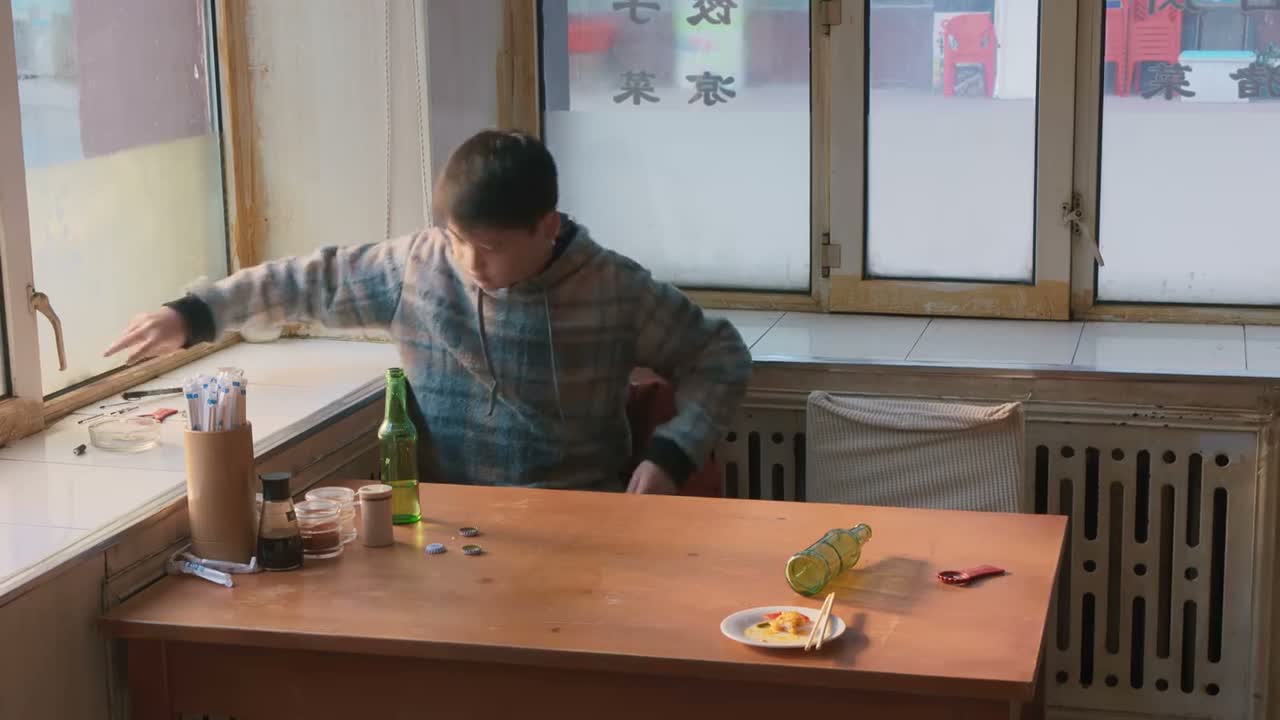
“What are you doing? Coming. Hurry up!”

“What are you doing? Are you crazy?”

“What are you doing? Are you still with him? Did you come to see him?”

“What are you doing? Nothing. I came out to answer a call.”

“Waiting for you. Why wait for me?”

“What's wrong? Weren't you supposed to leave with Xiaoming?”