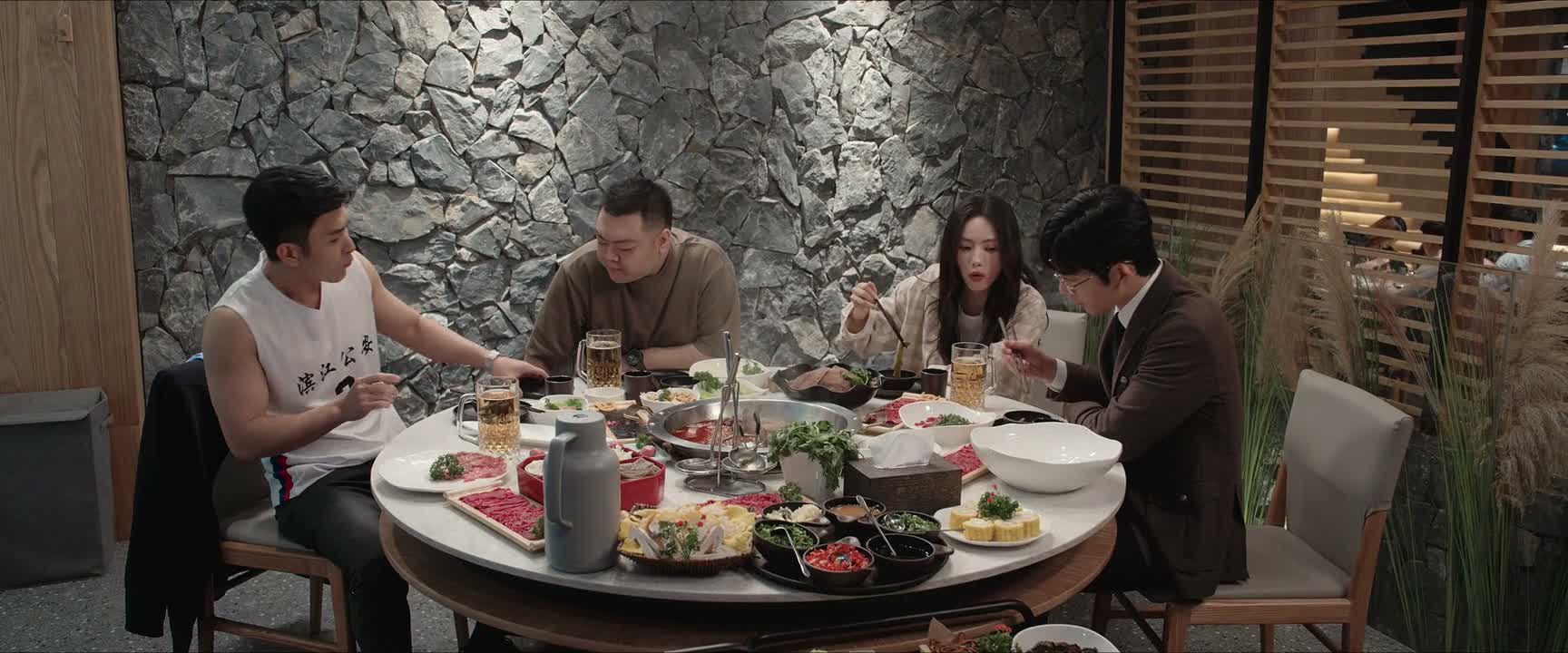
咋的 你接了呀 接了 不接你俩吃啥喝啥
“So, you took it? I took it. How else would we survive?”
THE DIALOGUE REEL
“The family kept pulling at me, pushing canned food and sweet-talking.”
咋的 你接了呀 接了 不接 你俩 吃啥喝啥
“So, you took it? I took it. How else would we survive?”
“Don't act morally superior to me; my dirty compromises are what keep food on your table.”
In working-class Chinese contexts, taking minor perks or under-the-table gifts is often rationalized through the moral imperative of providing for family dependents.
LEARNING CHUNKS & PARTICLES
so what? / what of it?
A colloquial Northern Mandarin rhetorical challenge, often conveying defiance or blunt confrontational attitude.
what to eat and drink; how to make a living
A colloquial phrase referring to basic material survival or daily sustenance.
Softens the rhetorical question while adding a sharp, reactive conversational tone.
VOCABULARY & EXPRESSIONS
Parallel Spoken Cinema Scenes (语义近邻切片)

“I'll answer if I want, and I won't if I don't.”

“What's going on? Weren't you supposed to catch me?”

“this case. We cannot.”

“Every time, she brought you clothes or food,”

“Otherwise, how could he catch it?”
“Tastes good. I need to take this call. You guys eat.”