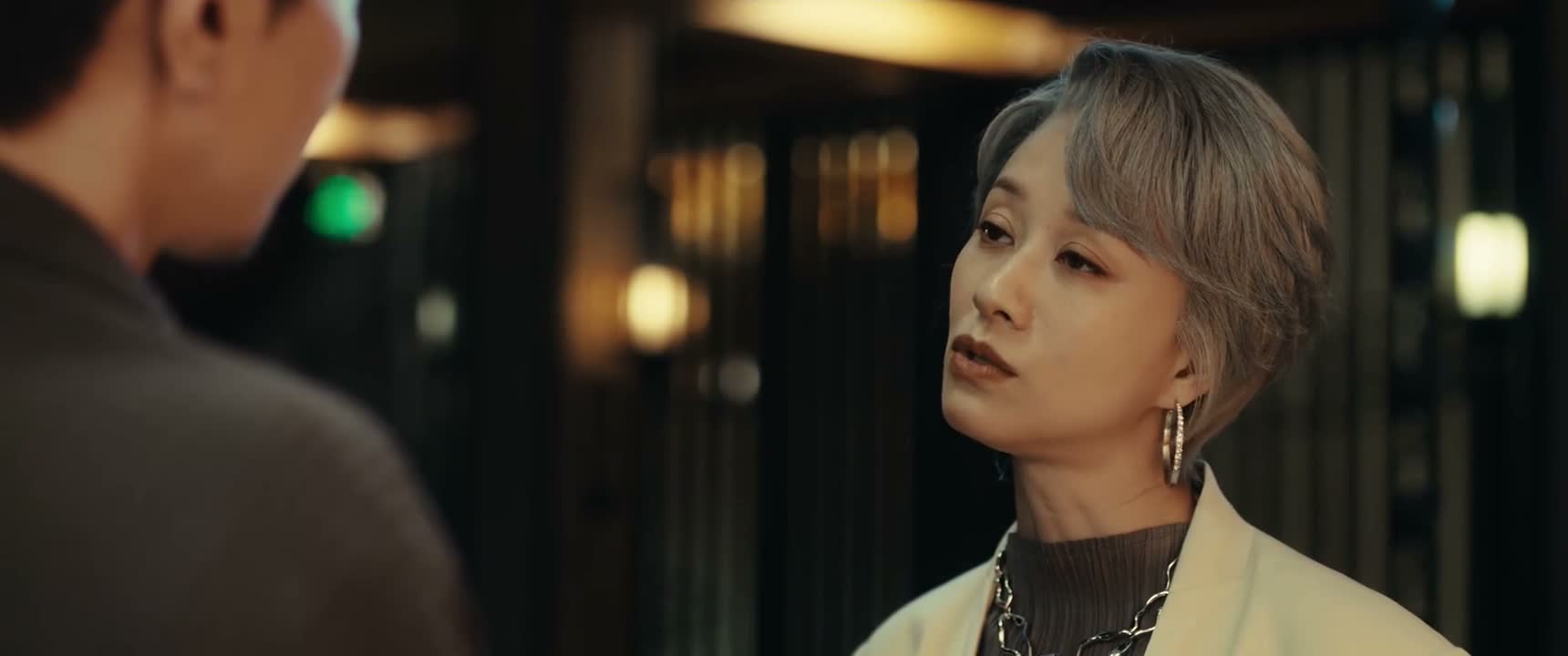
你以为你这么做 伤害的是我 是吗
“You think you only hurt me?”
THE DIALOGUE REEL
不是我们月海欠你的
“Not Yuehai's debt to you.”
你以为 你这么做 伤害的是 我 是吗
“You think you only hurt me?”
“You hurt every resident of Yuehai!”
“You think your petty revenge is just about hurting me, but you're being utterly reckless and destroying innocent lives.”
Appealing to the welfare of the public ('老百姓') elevates an argument to the highest moral plane in Chinese ethical discourse, casting private retaliation as irresponsible and dishonorable.
LEARNING CHUNKS & PARTICLES
you mistakenly believe that...
Commonly used at the beginning of a challenge to explicitly highlight and dispute an erroneous assumption.
is that so? / right?
Used as a sharp rhetorical tag question to challenge the listener and invite self-reflection rather than seeking a literal answer.
Forms a pointed rhetorical question emphasizing the absurdity of the listener's assumption.
VOCABULARY & EXPRESSIONS
Parallel Spoken Cinema Scenes (语义近邻切片)

“Do you think I will harm you?”

“Do you think I will harm you?”

“I believe you must have had your reasons for doing this.”
“I'm doing this entirely for you.”

“You clearly knew I would get hurt.”

“I like you so much. How could I have hurt you?”