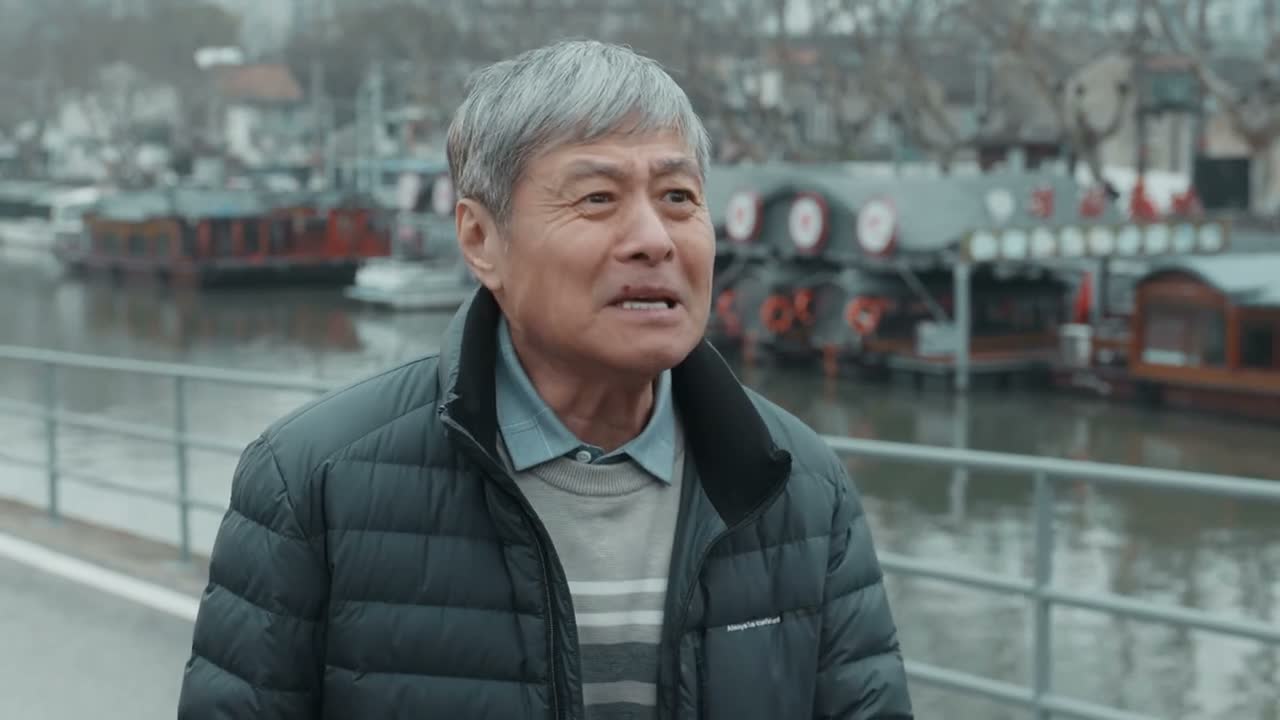
我都应付老半天了 早就没词了
“I've been dealing with them for a long time. I ran out of words long ago.”
THE DIALOGUE REEL
你回来
“Come back.”
我都 应付 老半天 了 早就 没词了
“I've been dealing with them for a long time. I ran out of words long ago.”
“I can't stand you acting like this when things happen. Be a man.”
“I'm completely drained and have nothing left to say, so handle it yourself.”
'Yingfu' denotes perfunctorily dealing with people or taxing situations out of social obligation rather than genuine interest.
LEARNING CHUNKS & PARTICLES
for ages; for a very long time
A colloquial northern Chinese time exaggeration used to emphasize impatience or fatigue.
at a loss for words; run out of excuses or talking points
Colloquially describes having nothing left to say when stalling, negotiating, or explaining.
Indicates a completed change of state, stressing that the speaker has already reached their limit.
VOCABULARY & EXPRESSIONS
Parallel Spoken Cinema Scenes (语义近邻切片)

“I couldn't even get a single line all day.”

“All that talk, and you still didn't get her.”
“for even one more day is torture.”

“I've been too busy.”

“a humiliating loss to Jiang Hansheng.”

“need a bit more time. I can handle it myself.”