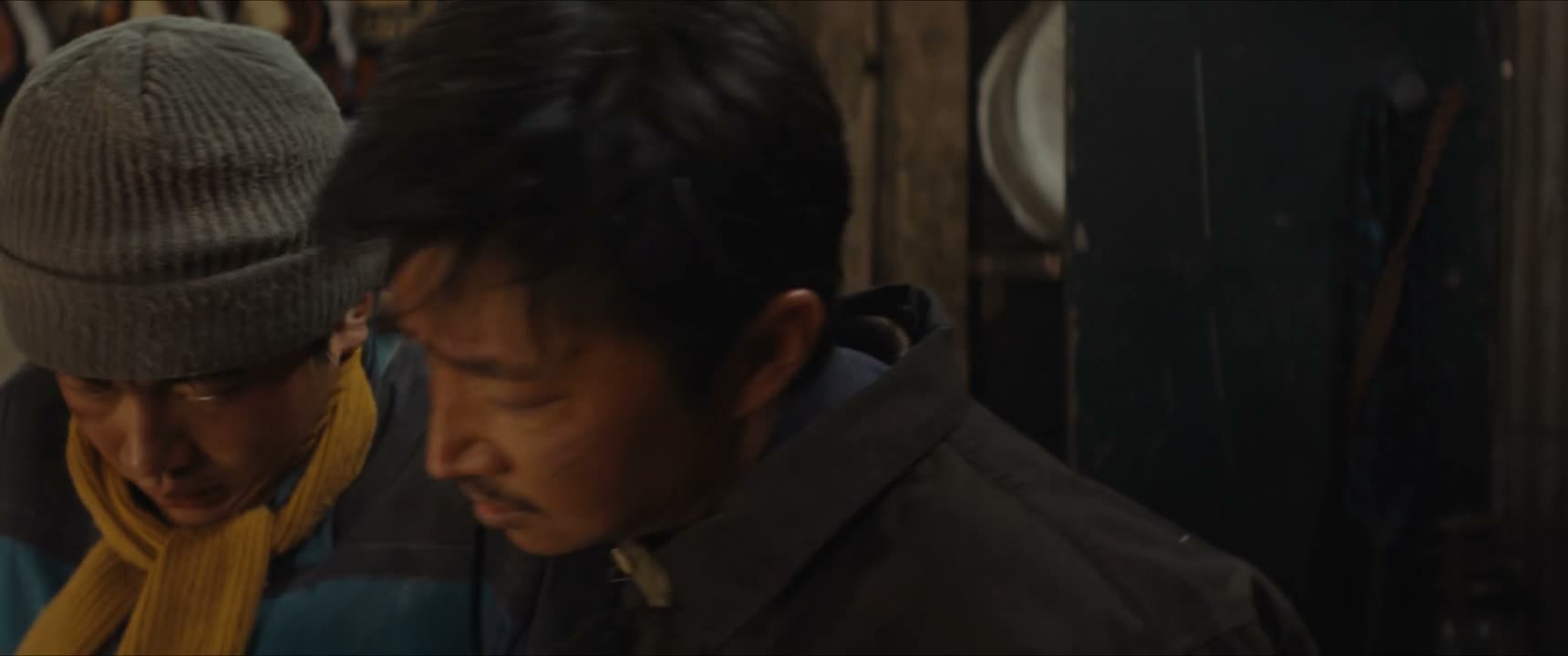
咱俩不是早就说好了吗
“Didn't we agree to it?”
THE DIALOGUE REEL
“I... Is this a difficult thing to tell me?”
咱俩 不是 早就说好了 吗
“Didn't we agree to it?”
“As long as you can find another job, just tell me.”
Direct spoken expression in this communicative setting.
In Chinese relationships, 'saying it in advance' (说好) serves as a binding verbal commitment that implies mutual trust without formal written contracts.
LEARNING CHUNKS & PARTICLES
the two of us
Very common northern colloquial pronoun combining 'we' and 'two', implying closeness.
agreed upon long ago / settled long before
Used to invoke a prior agreement and shut down unnecessary hesitation or dispute.
Forms a rhetorical negative question ('didn't we...?') demanding confirmation and agreement.
VOCABULARY & EXPRESSIONS
Parallel Spoken Cinema Scenes (语义近邻切片)

“We had a deal.”

“♪ The stars flow across the sky, and I walk this road with you ♪ didn't we already make a pact in the very beginning? ♪ From strangers, our hearts slowly grow close ♪”

“Didn't I just mention him?”

“Didn't we agree on this?”

“But we agreed on that.”

“Wasn't it agreed it would be you?”
“Didn’t we agree before you set off?”