我是搞软件开发的 来来来 坐坐坐
“I work in software development. Come, have a seat.”
THE DIALOGUE REEL
明总 别别别
“Mr. Ming. No, no, no.”
我是 搞软件开发的 来来来 坐坐坐
“I work in software development. Come, have a seat.”
Direct spoken expression in this communicative setting.
Triplicating verbs like '来来来' or '坐坐坐' is a hallmark of northern and general Chinese casual etiquette to break ice and eliminate awkward hierarchy.
LEARNING CHUNKS & PARTICLES
working in software development
The colloquial verb '搞' frequently replaces '做' or '从事' in casual speech to denote working in a specific field.
come on / over here
A tripled imperative interjection used to urge people forward warmly and reduce formal awkwardness.
sit down, please take a seat
Repeating '坐' three times is standard informal Chinese hospitality to make visitors feel instantly comfortable.
VOCABULARY & EXPRESSIONS
Parallel Spoken Cinema Scenes (语义近邻切片)

“Have a seat. Come and sit.”

“You're here. Come. Sit.”

“Come. Sit and watch. Come. Sit.”

“Have a seat. Come on, have a seat. Come on. Sit.”
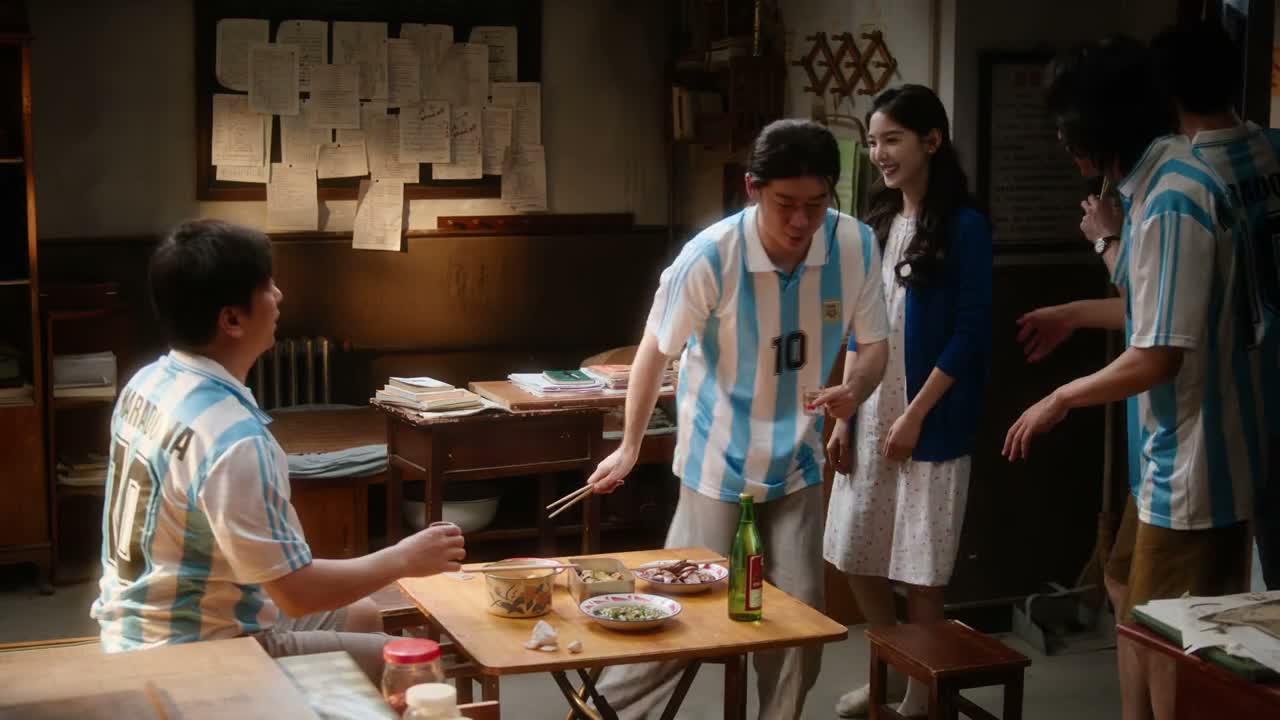
“-Come on. Have a seat. -Sit, sit.”

“-Sit, sit. -Come on, man.”