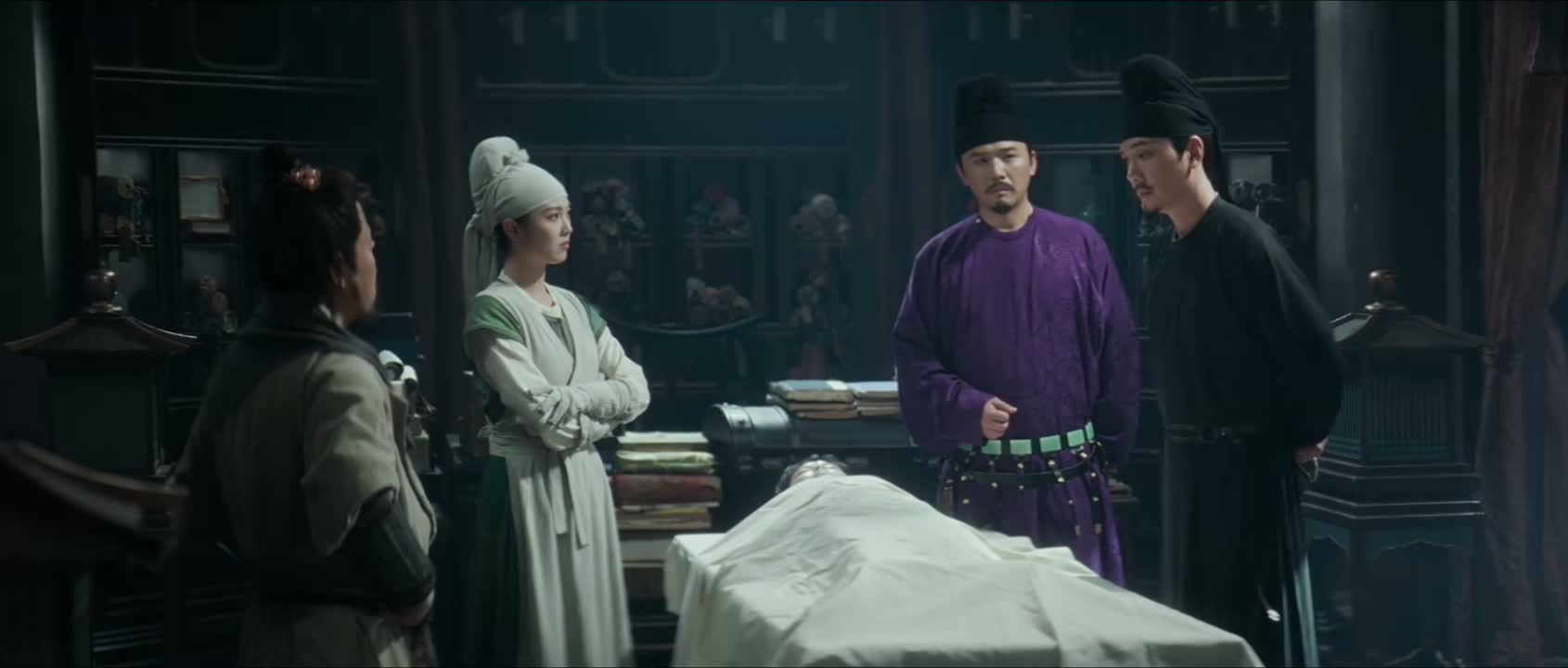
跟太太能有什么仇怨 自然是受人指使
“What grudge could she possibly hold against the Mistress? She had to be acting on someone's orders.”
THE DIALOGUE REEL
“Nanny Zhou is nothing but a lowly servant.”
跟太太 能有什么仇怨 自然是 受人指使
“What grudge could she possibly hold against the Mistress? She had to be acting on someone's orders.”
大姑娘可别乱说
“Ms. Jinzhao, don't make reckless accusations.”
“Don't pretend she acted alone; someone powerful clearly put her up to this.”
In wealthy traditional households, internal power struggles often involved low-ranking servants executing plots on behalf of their mistresses or rival factions, shielding the real instigator.
LEARNING CHUNKS & PARTICLES
grudge; enmity
A formal noun referring to deep-seated resentment or feud between individuals.
acting under someone else's orders; instigated by someone
A frequent idiom in legal, dramatic, or conflict settings when a subordinate acts as a puppet.
VOCABULARY & EXPRESSIONS
Parallel Spoken Cinema Scenes (语义近邻切片)

“Couples don't hold grudges overnight.”

“Actually, that couple didn't even have any deep-seated hatred.”

“What grudge do you have against us?”

“She plotted against the Madam and it was all because of you, wasn't it?”

“I've seen spouses turn against each other and brothers become enemies.”
“How could he have enemies? Why would anyone bother framing him?”