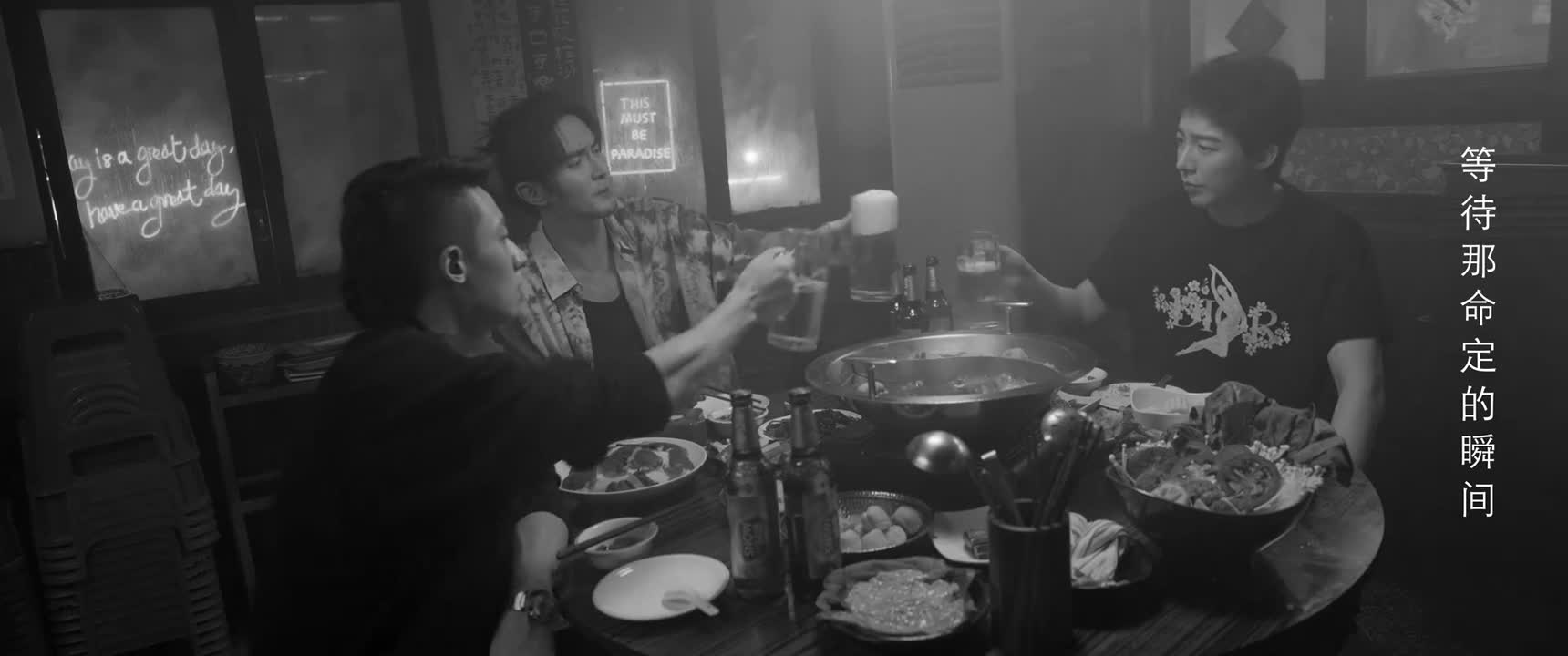
人家都要结婚了 提她干吗呀
“She's getting married. Why bring her up?”
THE DIALOGUE REEL
差不多行了
“Enough.”
人家 都要 结婚了 提她干吗呀
“She's getting married. Why bring her up?”
不是
“Wait.”
“Leave her alone and drop the subject already.”
Once someone is married or engaged, bringing them up in front of an ex is considered taboo and poor etiquette, prompting immediate boundary-setting.
LEARNING CHUNKS & PARTICLES
why bring her up?
Use this rhetorical pattern to bluntly discourage someone from mentioning an uncomfortable person or topic.
she/they (referring to someone else with emotional distance)
Commonly used in spoken Chinese to refer to a third party whose business is separate from the conversation.
Softens the rhetorical question while adding a tinge of emotional exasperation.
VOCABULARY & EXPRESSIONS
Parallel Spoken Cinema Scenes (语义近邻切片)

“But marriage isn't about tying her down.”

“He even brought all these gifts.”
“they're heading for marriage anyway.”

“If she gets married, what happens to us? You're the stupid one.”

“He didn't mention anything about a proposal.”

“why would I marry him? I could find someone with better prospects.”