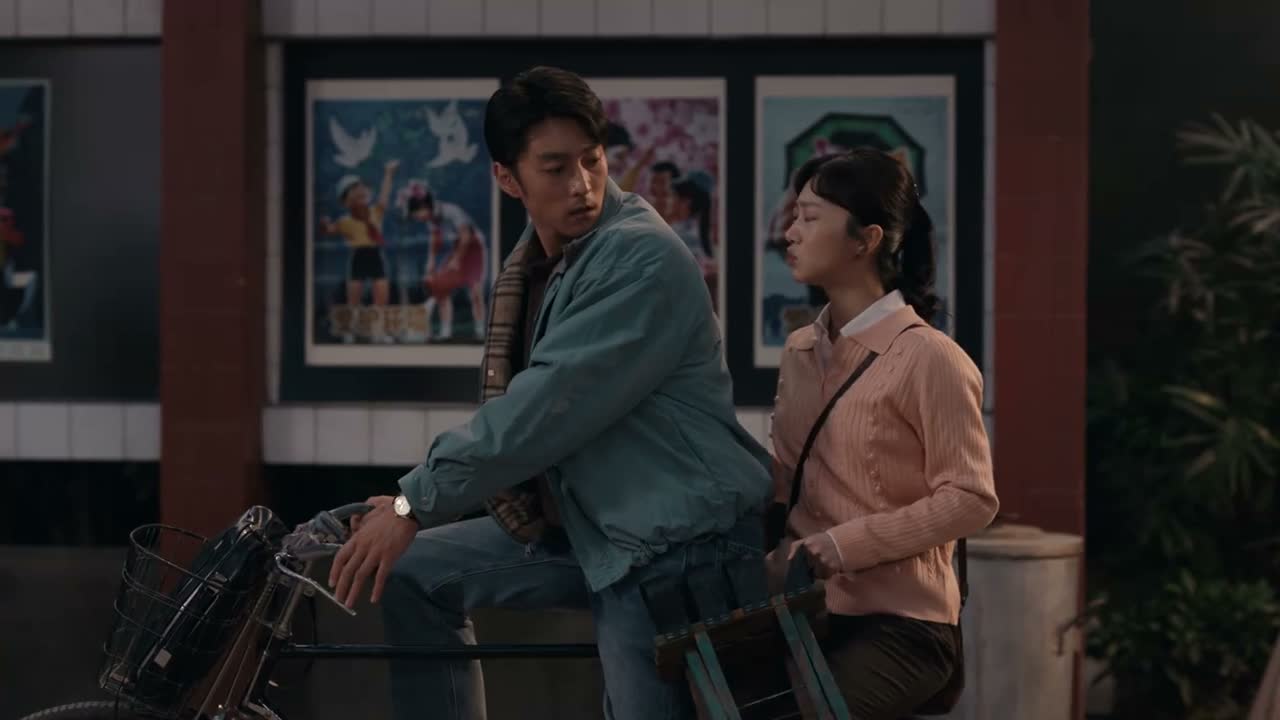
能带我一个吗 我还没看过电影呢
“Can I join? I've never watched a movie before.”
THE DIALOGUE REEL
真的
“Really?”
能带我一个吗 我 还没 看 过电 影 呢
“Can I join? I've never watched a movie before.”
这不合适 这样 我等过几天去医院教你 行吗
“I don't think it's appropriate. I'll head to the hospital and teach you in a few more days, okay?”
“Take me along with you; I want to be by your side.”
In close Chinese peer dynamics, casually asking to join an outing is common, though it can create awkwardness if the occasion is meant as an exclusive date.
LEARNING CHUNKS & PARTICLES
include me; count me in
A very common colloquial expression used to ask to join an activity or group gathering.
Marks a direct yes-no question asking for permission or inclusion.
Emphasizes the ongoing state of never having experienced movies, adding an appeal for sympathy.
VOCABULARY & EXPRESSIONS
Parallel Spoken Cinema Scenes (语义近邻切片)

“Are you still considering whether or not to take me?”

“She was always happy when you brought her fried rice.”
“Can't you just give me a ride?”

“I brought you into this trade.”

“I‘ve brought enough. That's ridiculous.”

“Me? Can I? Does it have anything to do with me?”