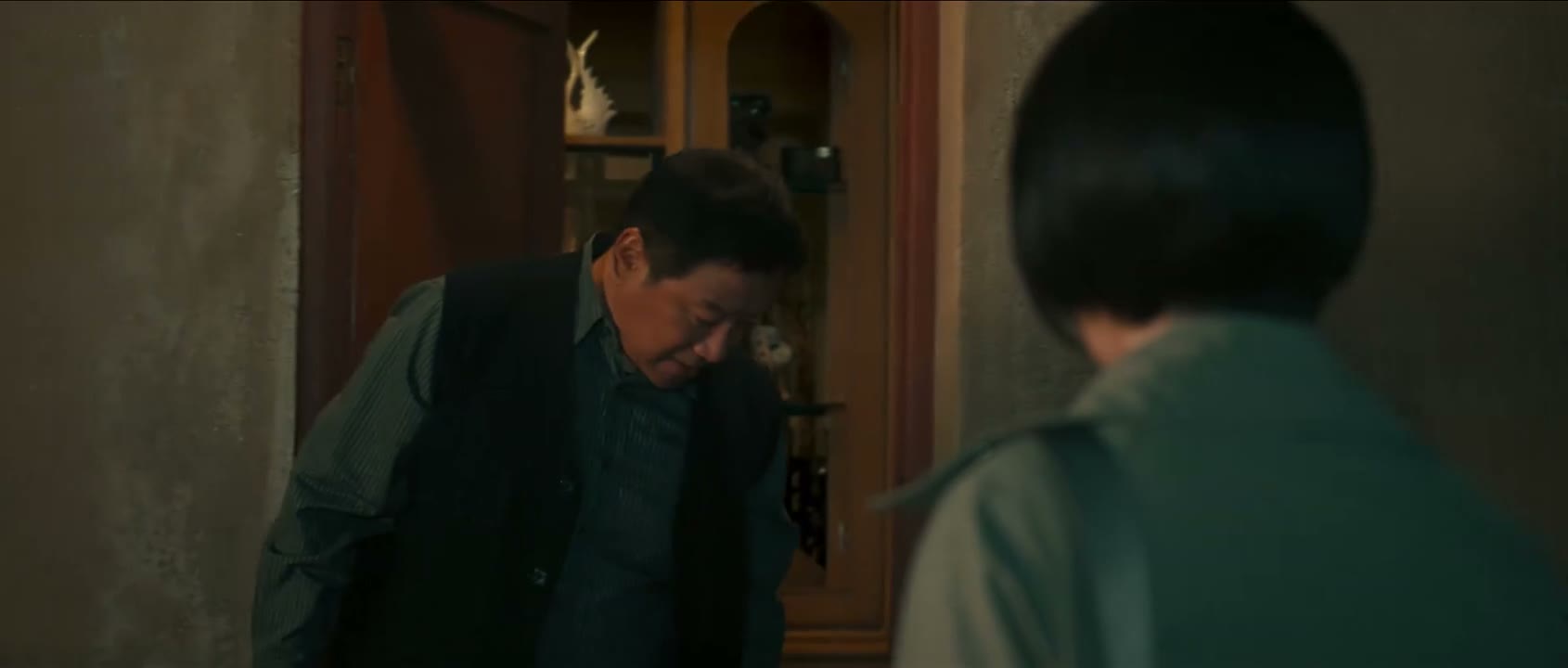
是这个意思吗 闭嘴
“Is it what you're suggesting? Shut up!”
THE DIALOGUE REEL
你的意思是 如果祯娘愿意 咱们就把她请回来呗
“do you mean that if Zhen agrees, we should admit her back into the clan?”
是这个意思吗 闭嘴
“Is it what you're suggesting? Shut up!”
你在这儿发什么疯啊
“Are you out of your mind, huh?”
“Don't you dare put words in my mouth or expose what we shouldn't talk about—be quiet!”
Ordering someone to 'bizui' (shut up) openly abandons surface politeness and social harmony (hexie), indicating intense frustration or panic that a sensitive boundary has been crossed.
LEARNING CHUNKS & PARTICLES
shut up / be quiet
A blunt and harsh imperative command to stop talking; use with extreme caution in spoken Chinese.
is that what is meant? / is that what you mean?
Frequently used rhetorically to confront an oversimplification, distortion, or unwanted inference.
Forms a direct questioning tone, here carrying confrontational and rhetorical weight.
VOCABULARY & EXPRESSIONS
Parallel Spoken Cinema Scenes (语义近邻切片)

“What does this mean?”

“What do they mean? They are not signing? It is deliberate.”

“I didn't mean that. Well, the whole country is promoting innovation.”

“That's not what I meant, really.”
“What is this?”

“I mean, what you're doing now is crooked.”