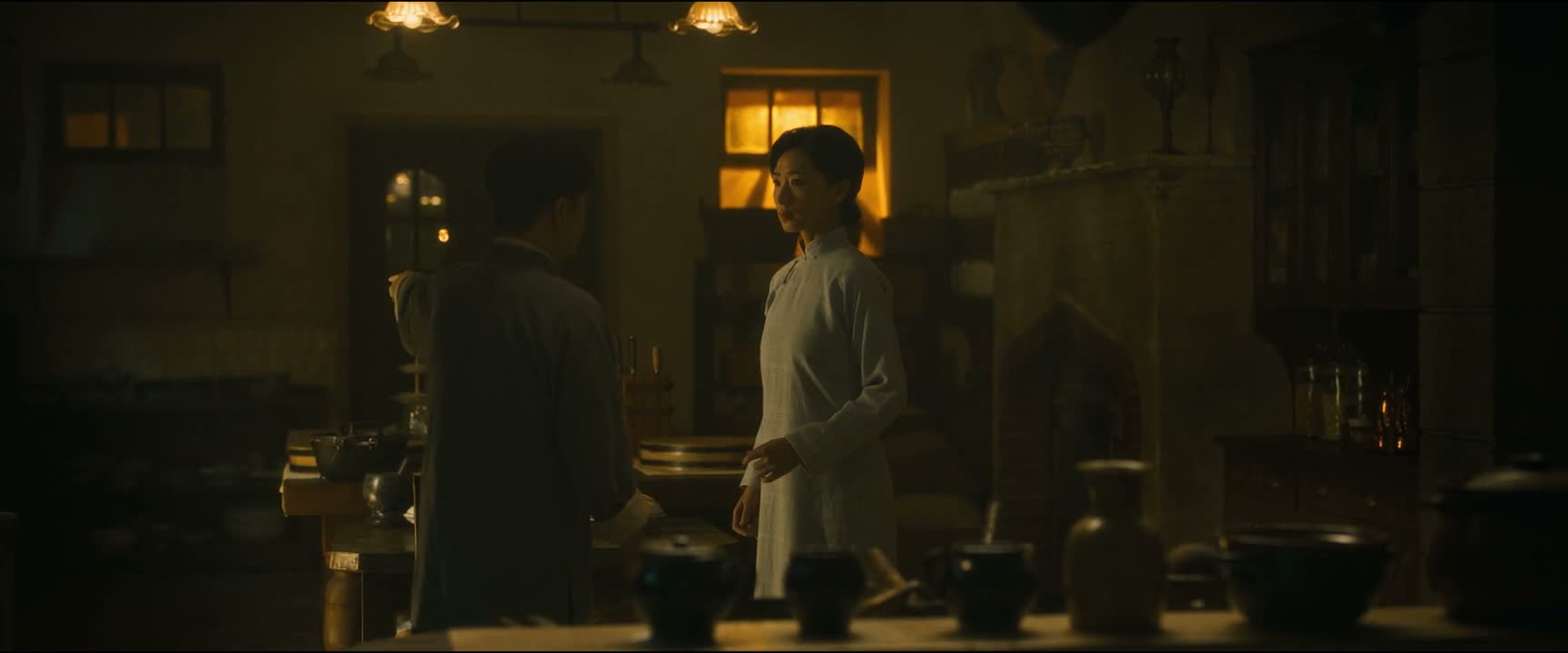
要不然他看见你的伤 得说我了
“Otherwise, when he sees your injury, he'll blame me.”
THE DIALOGUE REEL
不能自己乱跑 我一会儿 还是得跟海楼少爷说一声
“You can't go wandering around on your own. Later, I should tell Young Master Hailou about this.”
要不然 他 看见 你的伤 得说我了
“Otherwise, when he sees your injury, he'll blame me.”
“Just stay in bed since you're crippled.”
“Please stay still; I'm the one who will catch hell if you make yourself worse.”
In traditional households or hierarchical master-servant settings, caretakers are held personally accountable for any harm that befalls their charges.
LEARNING CHUNKS & PARTICLES
otherwise / or else
Commonly used in spoken Chinese to introduce the negative consequence of not following advice.
will surely scold/criticize me
'得' (děi) expresses inevitable certainty, while '说' here colloquially means 'to scold or reprimand'.
Marks the imminent realization of a consequence or new situation (being scolded).
VOCABULARY & EXPRESSIONS
Parallel Spoken Cinema Scenes (语义近邻切片)

“But the day you got hurt, he was hurt pretty badly too.”
“He was clearly not injured, but he came back injured.”

“seeing you again, he must have mixed feelings.”

“As you can see, my arm is injured.”

“I'm fine. I thought he was only pretending.”

“He doesn't even know you're angry. You're only hurting your own health.”