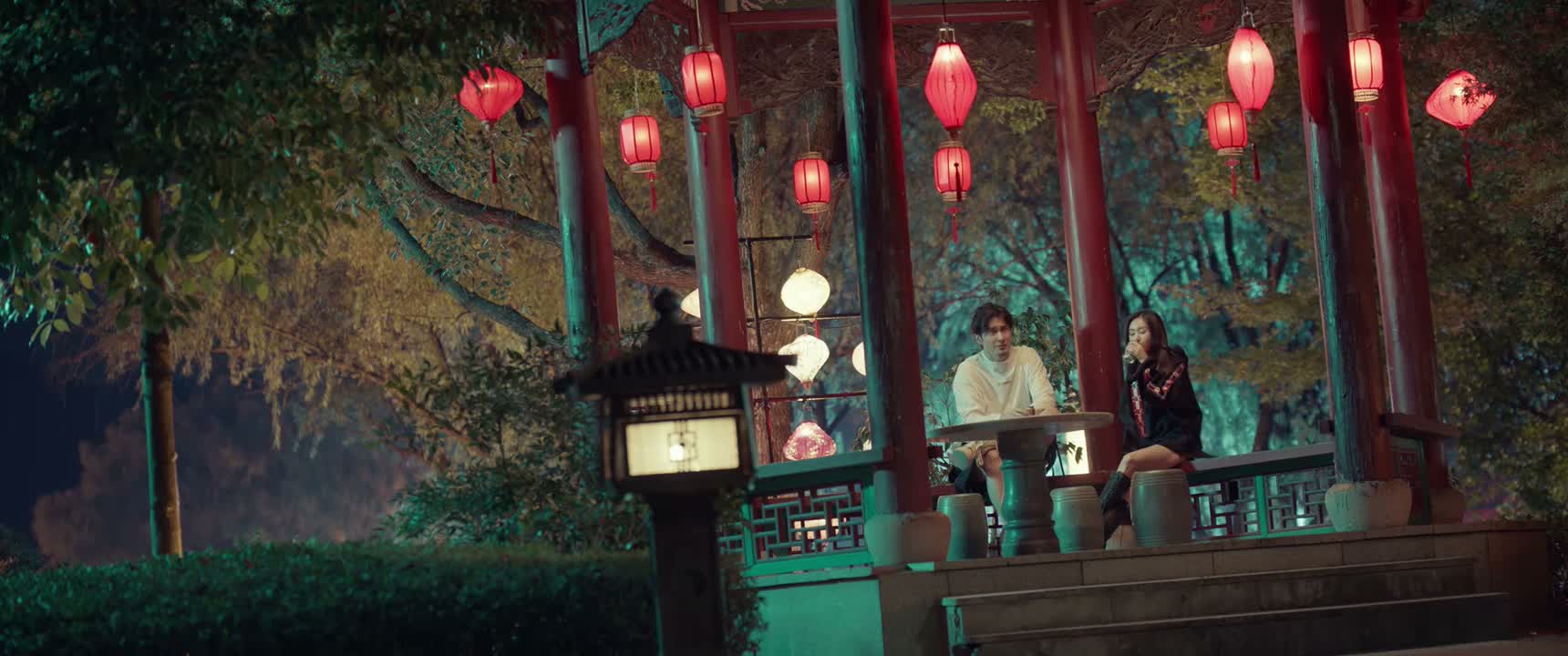
你在干什么呢 那都是我十年前的衣服了
“What are you doing? Those are from ten years ago.”
THE DIALOGUE REEL
妮妮 嗯
“Ni. Yeah?”
你在干什么 呢 那 都是我 十年前的衣服 了
“What are you doing? Those are from ten years ago.”
你找它干什么
“Why dig them out?”
“Why are you digging through my ancient junk? It is totally useless.”
Family members frequently comment directly on each other's seemingly odd or nostalgic habits without formal barriers.
LEARNING CHUNKS & PARTICLES
What are you doing?
A very common casual phrase used to ask someone what they are up to in informal spoken Chinese.
from ten years ago
A standard temporal modifier pattern [time duration + 前的 + noun] meaning something from that long ago.
Softens the interrogative question and indicates ongoing action or sustained curiosity.
Signals a change of state or marks the passage of a significant amount of time.
VOCABULARY & EXPRESSIONS
Parallel Spoken Cinema Scenes (语义近邻切片)

“What is this Ding Yu doing now?”

“What are you doing? What are you doing?”

“What is he doing?”

“What are you doing, kid?”

“What are you doing right now?”
“What are you doing now? Working?”