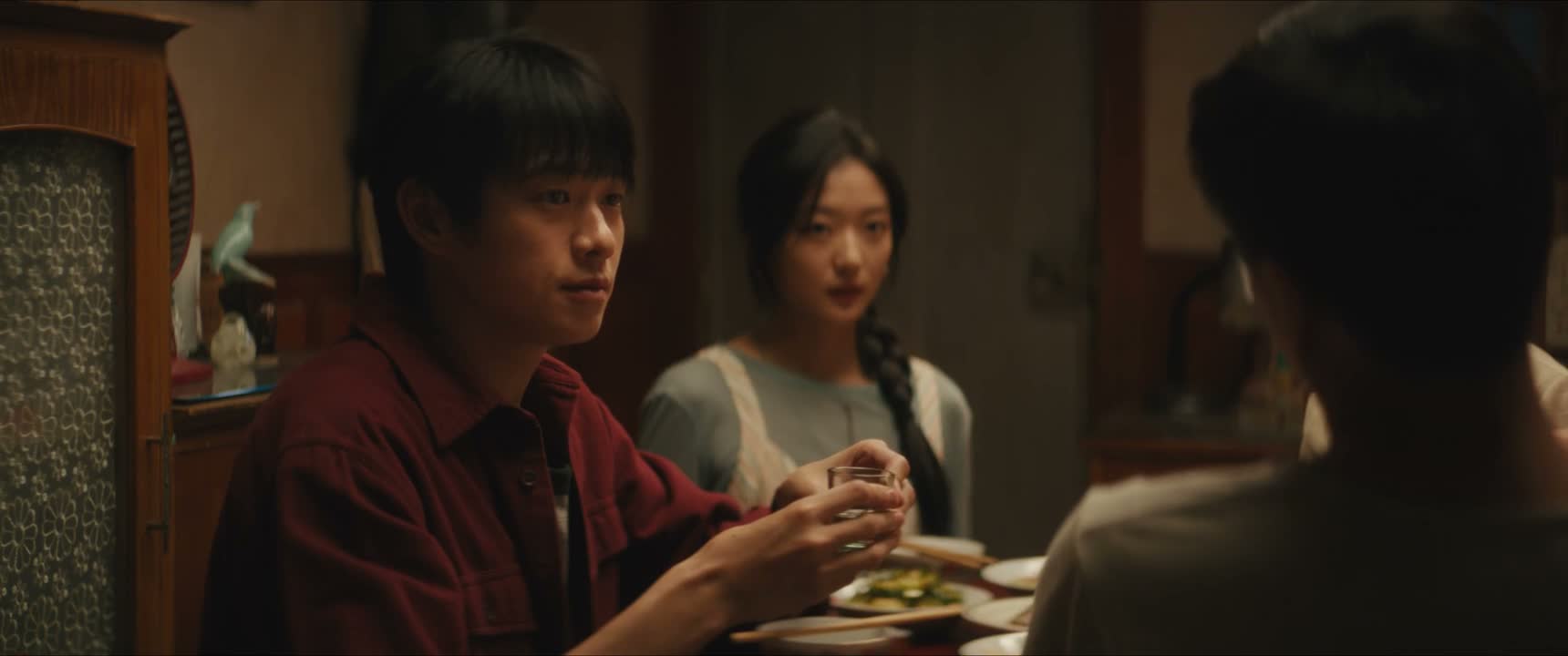
你这是什么破酒啊 劲也太大了吧
“What kind of awful wine is this? It's way too strong.”
THE DIALOGUE REEL
而且我会一直牢牢地握紧你的
“And I will always hold you tight.”
你 这是什么 破酒啊 劲也 太大了吧
“What kind of awful wine is this? It's way too strong.”
你
“You...”
“You're making my heart race and I'm losing my composure, so I'll blame it on this drink.”
In Chinese interpersonal dynamics, blaming drunkenness ('jiu jin') is a conventional face-saving way to explain away sudden vulnerability, flushed cheeks, or loss of composure.
LEARNING CHUNKS & PARTICLES
too strong, packs too much punch
Commonly used to describe strong alcohol, potent medicine, or any substance with an overwhelming effect.
lousy booze, cheap wine
A self-deprecating or playful, informal way to disparage alcohol, often without actual malice.
Softens the rhetorical question and expresses emotive sighing or exasperation.
Combined with '太' to signify excess, indicating a threshold has been crossed.
Conveys an exclamatory, slightly subjective estimate to invite the listener's agreement.
VOCABULARY & EXPRESSIONS
Parallel Spoken Cinema Scenes (语义近邻切片)
“What's yours for?”

“So when you are drunk, you are like this?”

“Your alcohol tolerance is truly legendary as well.”

“Don't play dumb just because you're tipsy.”

“He really can't hold his liquor.”

“I could do nothing but drown my sorrows in liquor,”