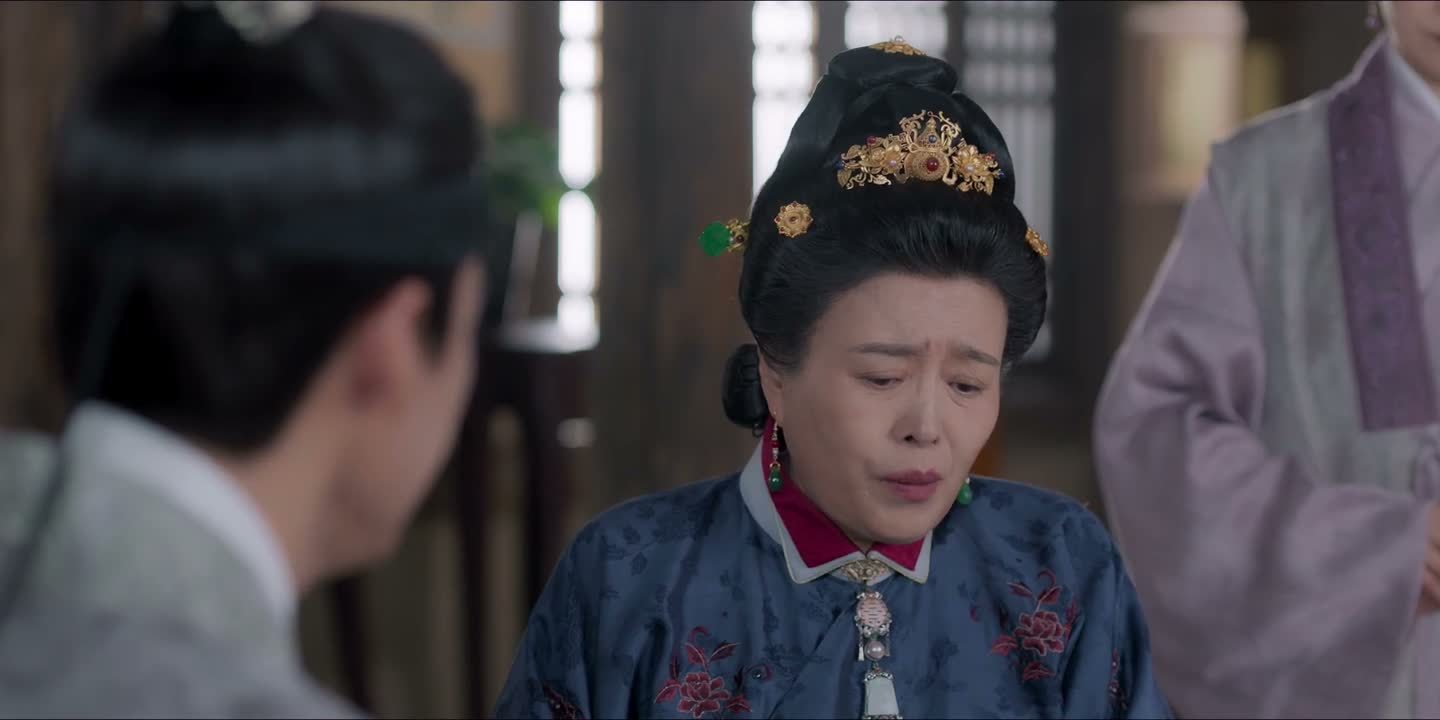
您回来可太好了 您跟小荣大爷 去通州之后啊
“It's so good that you're back. After you and Young Master Rong went to Tongzhou,”
THE DIALOGUE REEL
大姑娘 大姑娘回来了
“Miss Gu. You are back.”
您 回来 可 太好了 您跟小荣大爷 去通州之后啊
“It's so good that you're back. After you and Young Master Rong went to Tongzhou,”
“Master's duty was suspended. Master goes to the tavern all day long,”
“Thank goodness you are finally home, because everything has fallen apart since you left!”
Addressing the mistress as 您 and mentioning the master's status reflects the traditional Chinese domestic structure where servants rely heavily on key family leaders to restore order.
LEARNING CHUNKS & PARTICLES
really wonderful; so great
The emphatic adverb 可 intensifies 太...了, expressing profound relief or excitement.
after; ever since
Placed after a time phrase or clause to mark subsequent events in narrative discourse.
Functions as a pause particle to hold the listener's attention and signal that more critical details follow.
VOCABULARY & EXPRESSIONS
Parallel Spoken Cinema Scenes (语义近邻切片)
“I'll accompany you back to Tongzhou.”

“She's long taken Rong back to Tongzhou, leaving you here alone.”

“I wonder when I can return to Tongzhou.”

“You went to Tongzhou yesterday just for this?”

“Otherwise, you should come back to Tongzhou with me.”

“Why didn't you tell me you were returning to Tongzhou?”