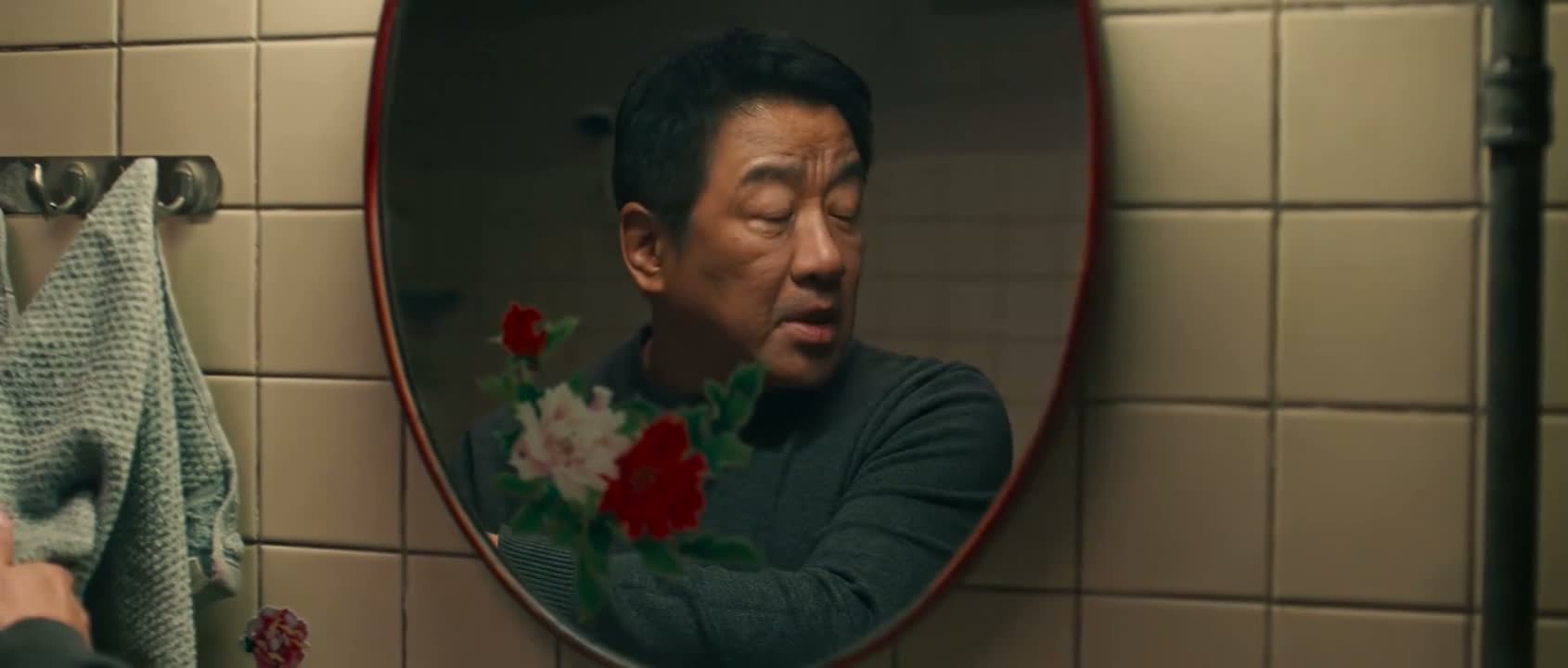
你是不是给我卖了呀
“my Yun Shouping hanging scroll?”
THE DIALOGUE REEL
我这恽寿平的中堂
“did you sell”
你 是不是 给我卖了 呀
“my Yun Shouping hanging scroll?”
“I didn't. I really didn't, Uncle. How would I dare sell your collection?”
“I know you're responsible for this missing artwork—confess now!”
In traditional Chinese families, elders' valuable antiques often represent family wealth, and squandering them by younger kin is seen as filial betrayal.
LEARNING CHUNKS & PARTICLES
isn't it the case that / did you or did you not
Placed before a verb phrase to formulate a direct, confrontational inquiry based on existing suspicion.
did (something undesirable) to my detriment
Here 'gei wo' functions as an ethical dative indicating an action done to the speaker's personal disadvantage or displeasure.
Indicates completion of the suspected illicit action.
Adds emotional intensity and sharpens the direct confrontational inquiry.
VOCABULARY & EXPRESSIONS
Parallel Spoken Cinema Scenes (语义近邻切片)

“Who else would I sell it to other than you?”

“who you can sell to then!”

“I'm selling. I'm selling. Are you satisfied?”

“You sell fakes too, don't you?”

“Weren't you working in the car shop?”
“Do you think I'm lying to you?”