不是 您不是要做那个什锦豆腐羹吗
“No. Don't you want to make brocade tofu soup?”
THE DIALOGUE REEL
你这切的是什么呀 不知道的以为你切的是芋头条呢
“What are you cutting? People who don't know think you're cutting taro.”
不是 您 不是要 做 那个 什锦豆腐羹 吗
“No. Don't you want to make brocade tofu soup?”
什锦豆腐羹也叫文思豆腐 豆腐切丝 一气呵成
“The brocade tofu soup is also called Wensi Tofu. Cut the tofu with shredded tofu and finish it in one go.”
“Hold on, don't blame me! I cut it this way because I thought we were just making regular tofu soup.”
In traditional Chinese cuisine, especially Huaiyang cuisine, dishes like Wensi Tofu require slicing soft tofu into thousands of hair-thin threads, making thick cuts a major blunder for an apprentice.
LEARNING CHUNKS & PARTICLES
hold on; wait a second; no (as a discourse marker)
Said at the very beginning of a sentence with a falling tone, it doesn't mean 'is not', but rather signals confusion or a quick attempt to explain oneself.
weren't you going to...?; didn't you want to...?
A polite rhetorical structure used to confirm a previous instruction when a misunderstanding occurs.
Paired with 'bushi' to form a negative question that expresses surprise and seeks confirmation of a prior assumption.
VOCABULARY & EXPRESSIONS
Parallel Spoken Cinema Scenes (语义近邻切片)

“So I'm not sure anymore.”

“Xiao, I want some minced meat and tofu.”
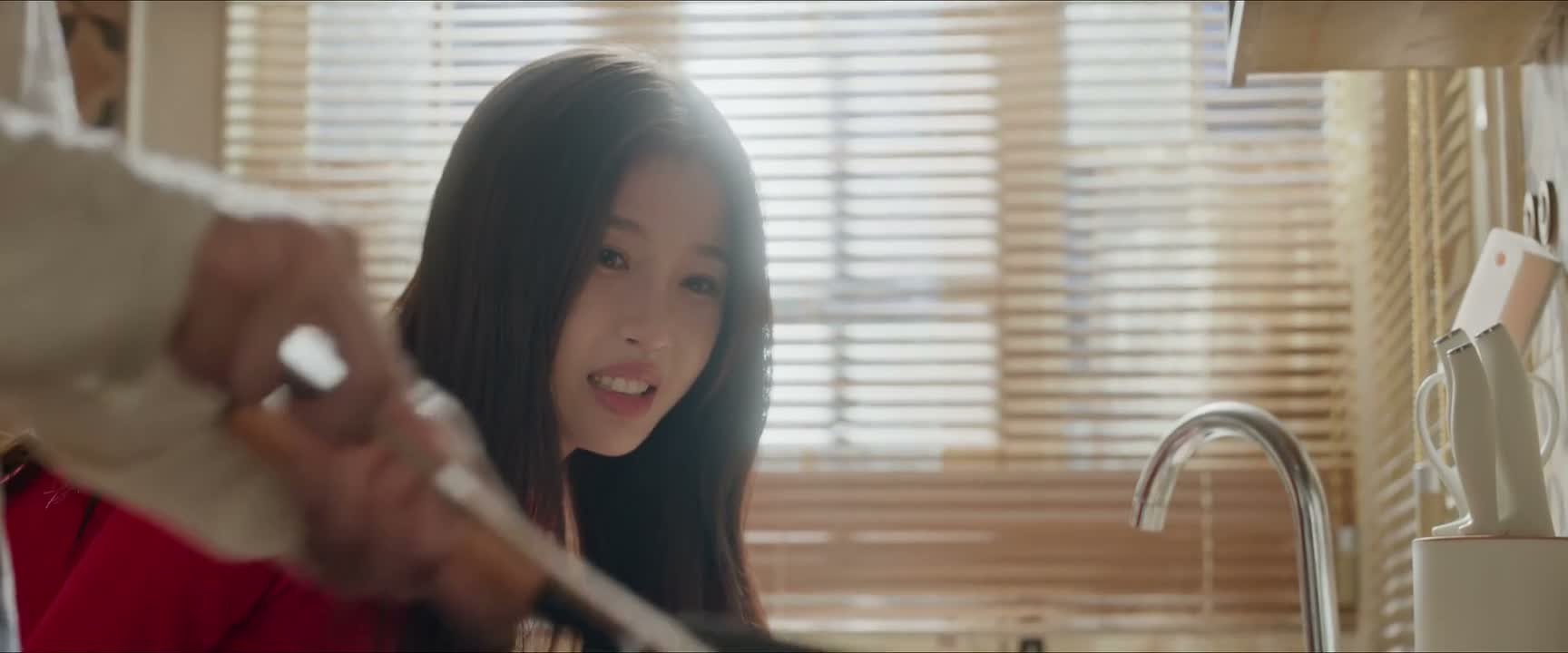
“You're making fried noodles for me?”

“Any soup you make tastes good.”

“But this isn't what I wanted to eat.”

“And what if it isn't? If it isn't, good.”