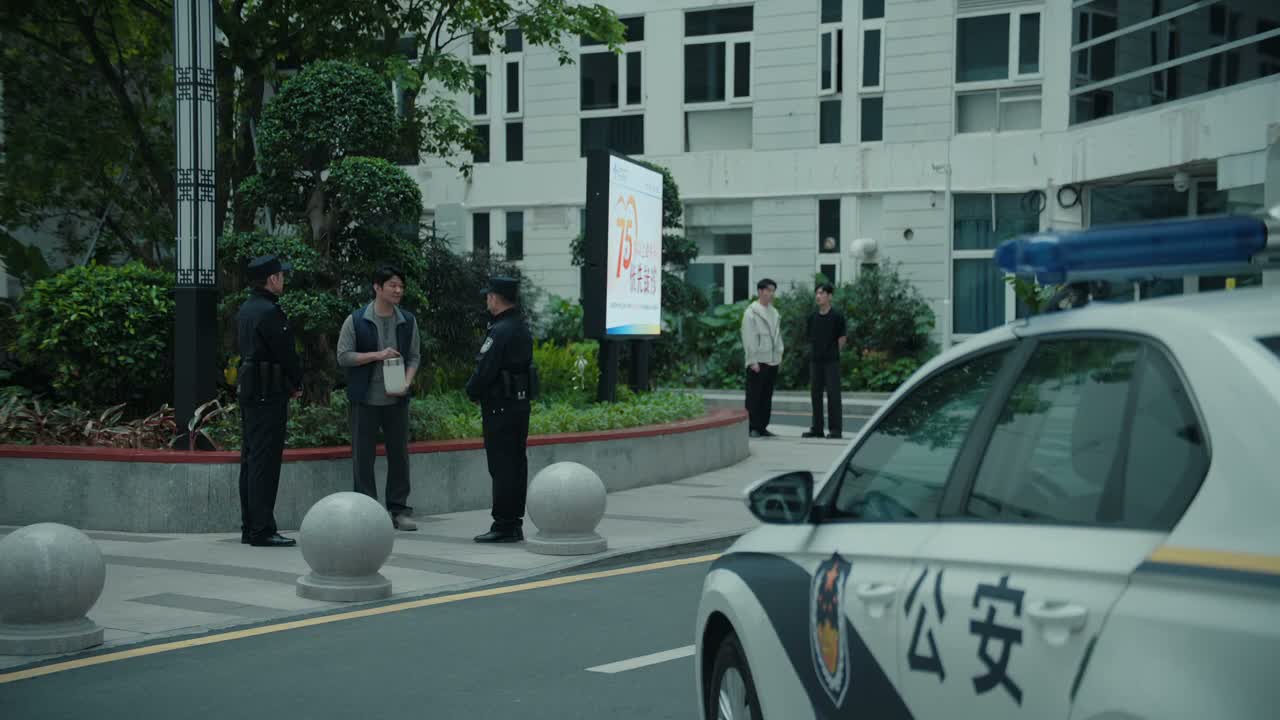
麻烦你亲自跑一趟 没事 应该的 辛苦了
“for making a trip. No problem. It's my job. Thanks again.”
THE DIALOGUE REEL
好 辛苦周律师啊
“Okay. Thank you, Mr. Zhou,”
麻烦你 亲自跑一趟 没事 应该的 辛苦了
“for making a trip. No problem. It's my job. Thanks again.”
这个 是我们杭城建筑大师 茅康山的作品
“This is a work by a master architect in Hangcheng, who is named Mao Kangshan.”
Direct spoken expression in this communicative setting.
Saying '应该的' ('it's only what I ought to do') defuses praise and displays professional humility, balancing the polite burden imposed by the other party.
LEARNING CHUNKS & PARTICLES
to make a trip / go somewhere in person
Commonly paired with '麻烦你' to acknowledge the physical trouble someone took to attend or deliver something.
it's my duty / glad to do it / as it should be
The quintessential Chinese polite response when praised or thanked for performing professional duties.
thanks for your hard work / you've had a tough job
Standard social formula used to show empathetic appreciation for someone's labor or travel.
Softens the fixed formula '辛苦了' and marks acknowledgement of the completed exertion.
VOCABULARY & EXPRESSIONS
Parallel Spoken Cinema Scenes (语义近邻切片)
“Thanks for coming over here.”

“Thank you for your cooperation.”

“Sorry for bothering you to come here.”