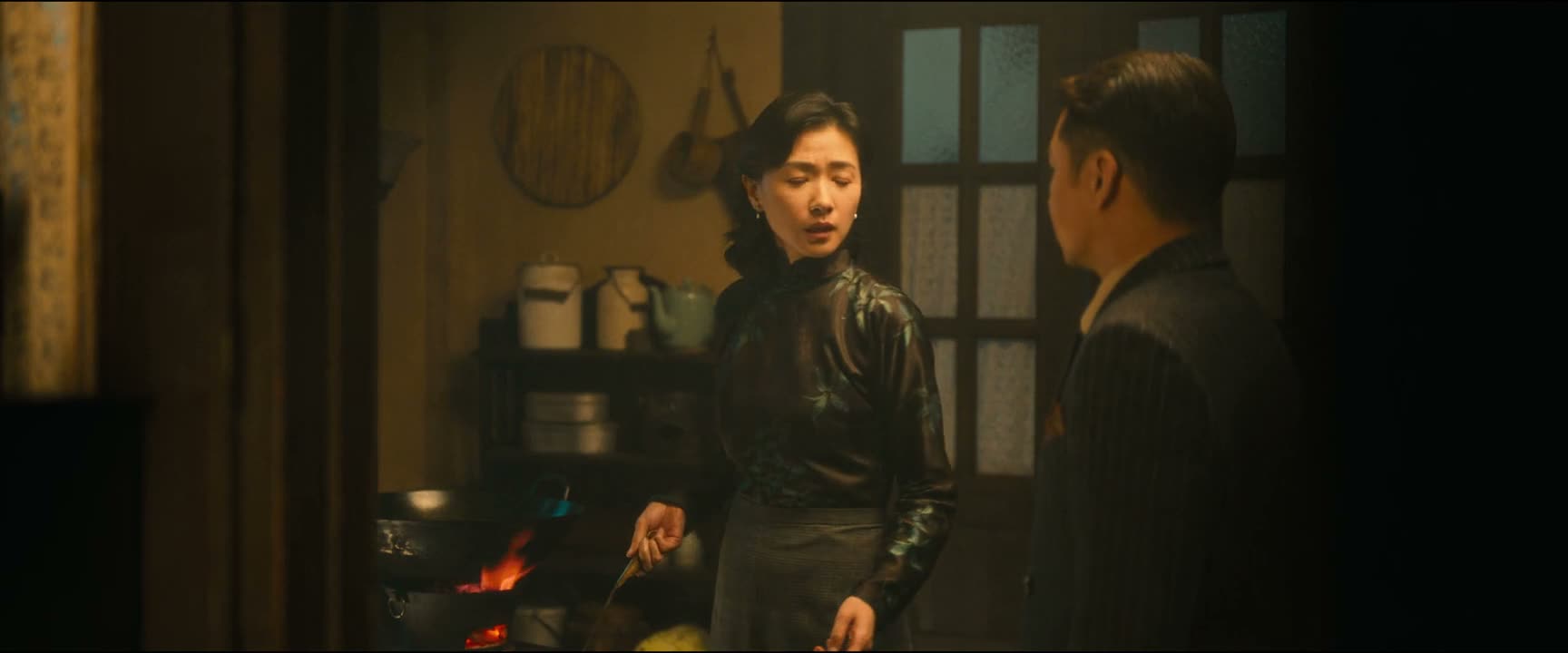
你是不是觉得自己挺能耐啊
“Zhu Helai, do you think you're really something?”
THE DIALOGUE REEL
朱赫来
“Zhu Helai, do you think you're really something?”
你是不是觉得自己挺能耐啊
“Zhu Helai, do you think you're really something?”
“What kind of person do you think I am?”
“Who do you think you are? Stop acting like you're better than everyone.”
In Chinese social interaction, overt self-importance violates humility norms, often prompting harsh rhetorical deflation from peers or superiors.
LEARNING CHUNKS & PARTICLES
quite capable / very skilled (often used sarcastically)
Common in northern colloquial Mandarin; when used in rhetorical questions, it mocks someone for being conceited.
do you think that... / do you happen to believe...
A framing phrase often used aggressively to confront someone's presumed internal mindset.
Enhances the rhetorical force and expresses indignation or challenge.
VOCABULARY & EXPRESSIONS
Parallel Spoken Cinema Scenes (语义近邻切片)

“Stop thinking you're such a great fighter.”

“Just now, you were quite something.”
“You are quite capable. You fight so fast.”