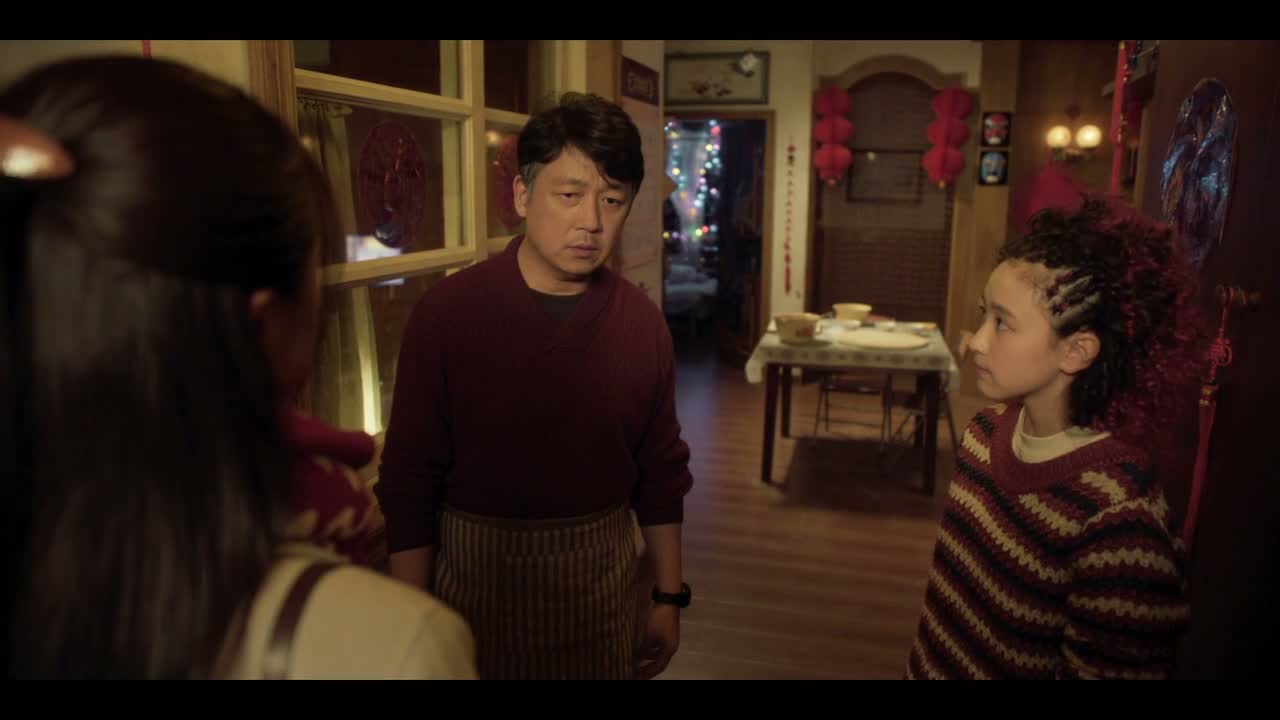
大过年的还能亏待你啊
“Of course we're having meat in Chinese New Year.”
THE DIALOGUE REEL
“Meat! Meat with celery! Look who's got an appetite.”
大过年的 还能 亏待你 啊
“Of course we're having meat in Chinese New Year.”
自从姑姑搬走了 家里吃肉就好少好少的
“Ever since Aunt Mei moved out, we haven't had meat often.”
“Don't worry, it's New Year's—of course you get to feast.”
In Chinese culture, the phrase '大过年的' acts as an ultimate social cushion, where frugality and disputes are set aside in favor of generosity and peace.
LEARNING CHUNKS & PARTICLES
during the New Year festive period
A classic conversational framing used to excuse overindulgence, resolve petty conflicts, or justify special generosity.
to treat unfairly; to shortchange
Frequently used in negative rhetorical questions to express warm hospitality or filial care.
Softens the rhetorical question into a warm, affectionate reassurance.
VOCABULARY & EXPRESSIONS
Parallel Spoken Cinema Scenes (语义近邻切片)

“It's New Year's Eve. Don't stay here.”

“It's Spring Festival. Say something nice.”

“Don't look so miserable on New Year. It's bad luck.”

“It's Lunar New Year. Why are you crying?”
“What is he busy with on New Year's Eve?”

“It's New Year. Let's not spoil everyone's mood.”