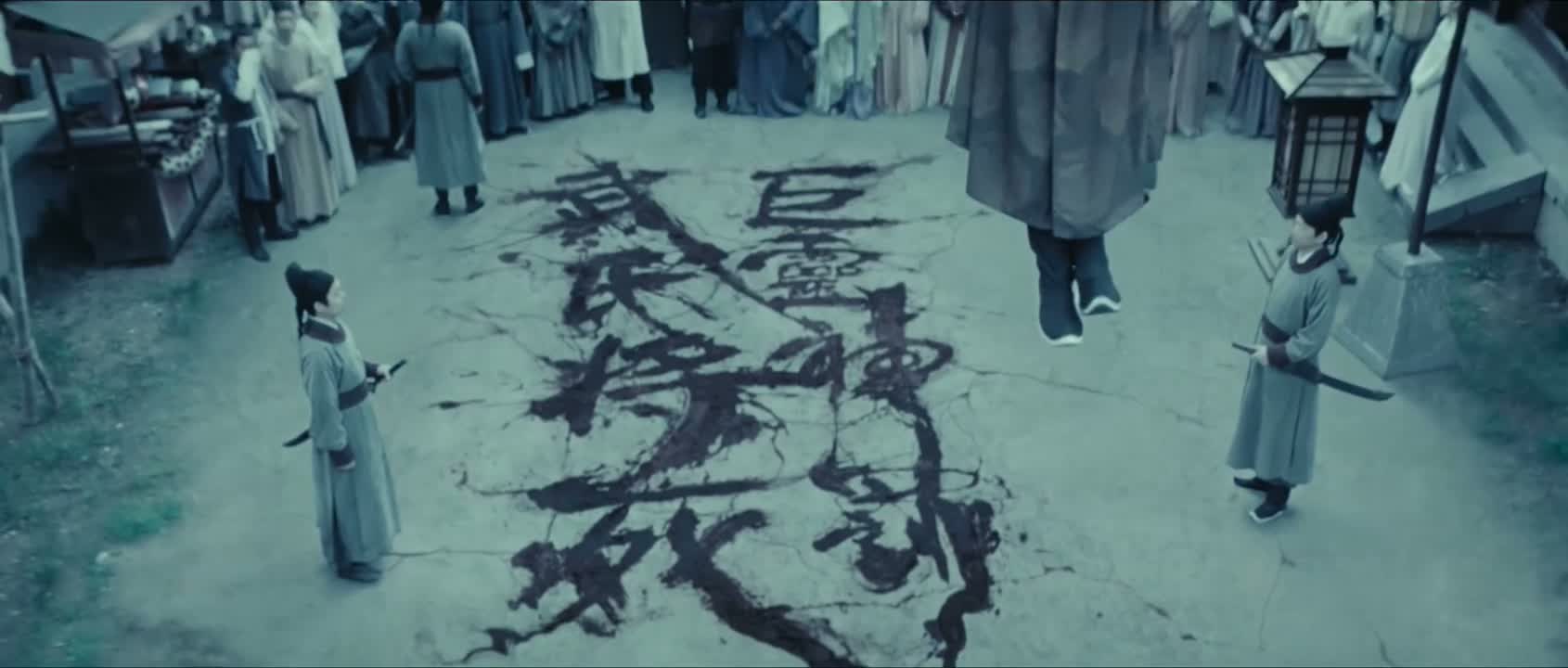
为何说这是神罚
“why did you call this divine punishment?”
THE DIALOGUE REEL
你们方才
“Just now,”
为何说这是神罚
“why did you call this divine punishment?”
你们还知道些什么
“What else do you know?”
“Don't hide behind superstitious claims; tell me what really happened.”
In traditional detective and legal narratives, officials often challenge common folk beliefs in divine omens to uncover the human truth behind crimes.
LEARNING CHUNKS & PARTICLES
why do (you) say
A formal, slightly literary way to question someone's reasoning or assertions.
divine punishment / wrath of the gods
Used in historical, mythological, or fantasy contexts to describe supernatural judgment.
VOCABULARY & EXPRESSIONS
Parallel Spoken Cinema Scenes (语义近邻切片)

“This divine punishment was to last a thousand years,”

“The gods cast 5 curses upon them,”

“This is heaven's punishment for you.”

“Isn't the punishment too harsh?”

“It's like torturing myself, isn't it?”
“(Wu shall die.) and a divine targeting Heavenly Empress?”