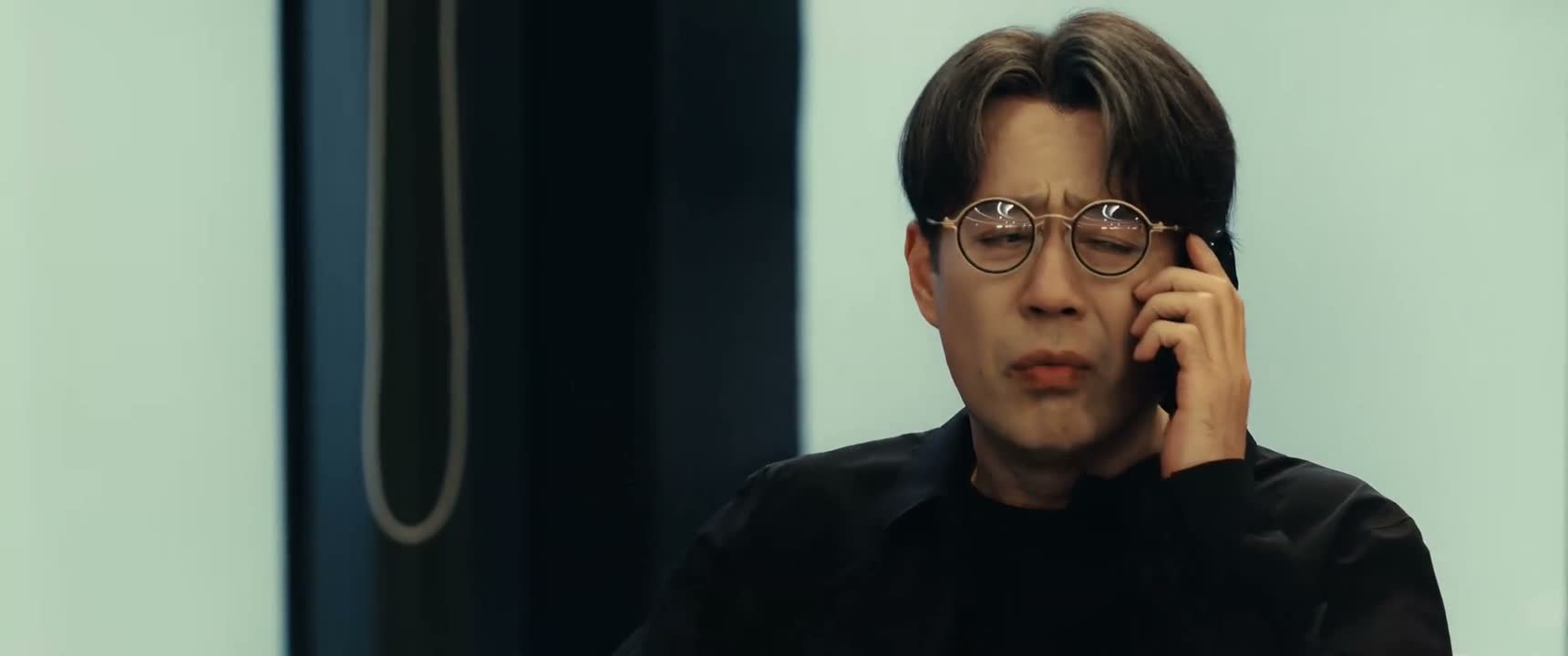
啥事 你在这儿说嘛 我这儿忙着呢嘛 你来些
“What is it? I'm busy here. Just come.”
THE DIALOGUE REEL
啥事 你 在这 儿 说嘛 我这儿 忙着呢 嘛 你来些
“What is it? I'm busy here. Just come.”
“Come on. - Go where? - Follow me. You'll know.”
“What's the big deal? Just spit it out right here—I'm in the middle of something.”
The frequent use of expressions like 'sha shi', 'ma', and 'lai xie' reflects a casual, direct communication style among acquaintances without polite formalities.
LEARNING CHUNKS & PARTICLES
busy right now; tied up with something
A highly frequent colloquial expression used to decline or brush someone off, often carrying a slightly impatient tone.
say it right here; explain it on the spot
Used to decline someone's attempt to pull you elsewhere or change locations, expressing a preference to handle the matter right where you are.
Used successively with a distinct Southwestern Mandarin colloquial nuance to state an obvious fact and convey an attitude of urging or resistance.
Paired with 'zhe' to indicate an ongoing action, emphasizing that one is currently occupied.
Equivalent to 'dian er' (a little bit) in Southwestern Mandarin; combined with 'lai' to mean 'come over a bit closer', expressing a mild imperative.
VOCABULARY & EXPRESSIONS
Parallel Spoken Cinema Scenes (语义近邻切片)

“What's wrong? Come out and talk.”

“What's happening tonight? Why the rush?”

“What? I have to go myself?”

“Whatever it is, let's talk it out. Save it!”

“- What? - Stop bugging me. Get back to practice.”
“I still have things to handle. I'll get back to work. That's it.”