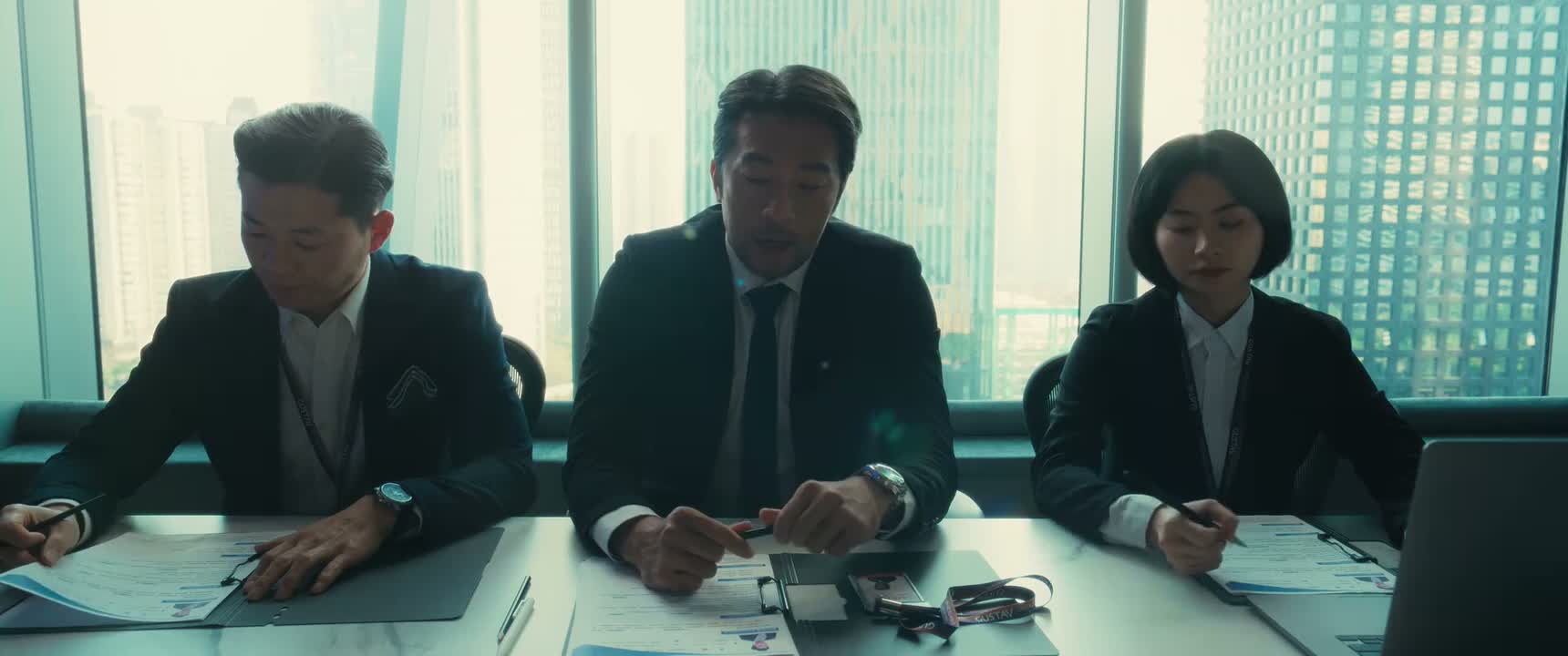
你这看着很憔悴啊 你就不该来公司
“You look exhausted. You shouldn't have come in.”
THE DIALOGUE REEL
“Have you fully recovered? You should have rested longer. Mr. Pei.”
你这 看着 很憔悴 啊 你 就不该 来公司
“You look exhausted. You shouldn't have come in.”
你该在家好好休息 对呀 你也太心系工作了
“You should be resting at home. Exactly. You care far too much about work.”
Direct spoken expression in this communicative setting.
In Chinese corporate culture, expressing concern over a boss's health or work ethic functions as a polite way to flatter dedication while maintaining rapport.
LEARNING CHUNKS & PARTICLES
looking very haggard, wan, or worn out
A common spoken phrase to comment directly on someone looking visibly exhausted or unwell.
really should not have
Used with emphatic '就' to express strong regret, advice, or mild reproach about a past decision.
Softens the blunt observation and conveys heartfelt concern and personal closeness.
VOCABULARY & EXPRESSIONS
Parallel Spoken Cinema Scenes (语义近邻切片)

“Look at you. You look pale recently.”

“Why do you look so exhausted?”
“So why did you apply for this position at our company?”

“But I can see that at this company,”

“Running around all day for work. Aren't you tired?”

“But after all these years at the company, you still don't know what you want.”