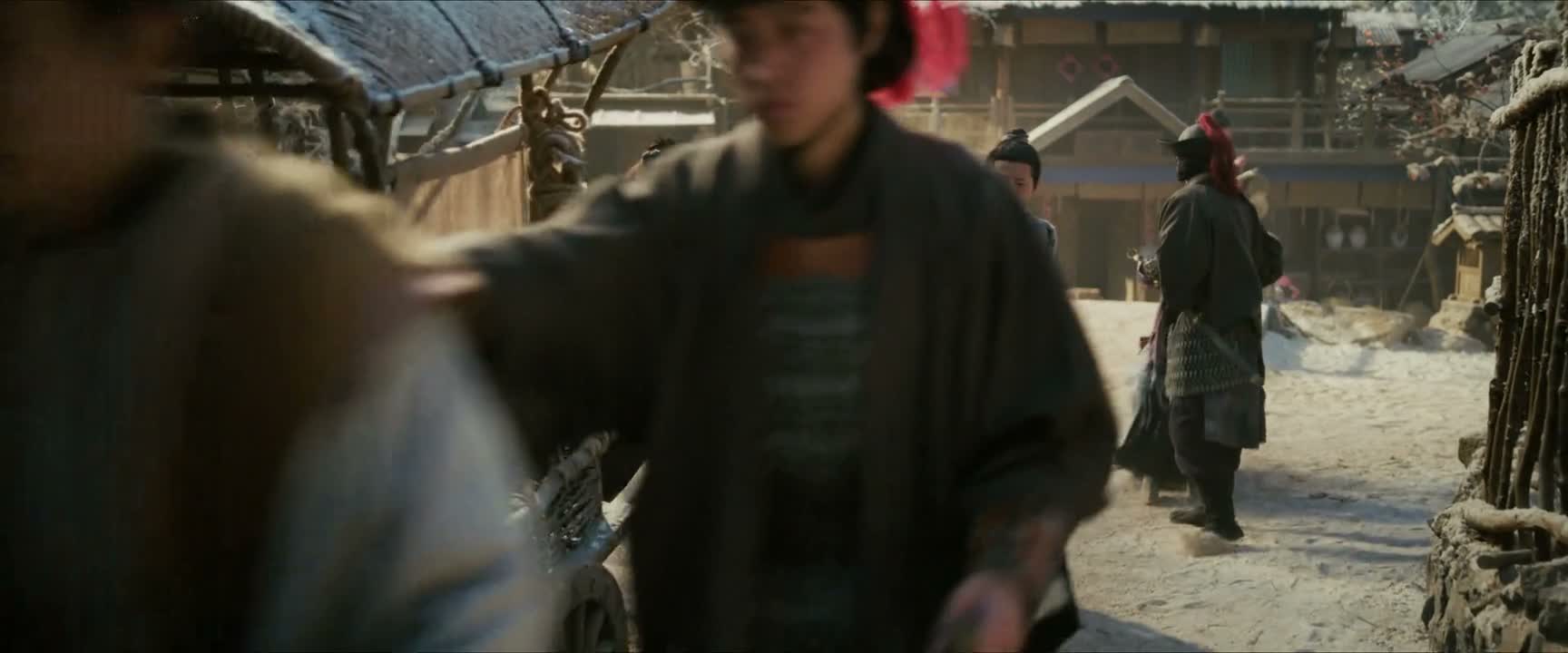
别跟着我 你干啥去啊 回去给你弟做饭去
“- Don't follow me! - Where are you going? Go home and cook for Xiaofei.”
THE DIALOGUE REEL
“You can't be a beggar with that thin skin. You...”
别跟着我 你干啥去 啊 回去 给你 弟做饭去
“- Don't follow me! - Where are you going? Go home and cook for Xiaofei.”
“Leave me alone and stop meddling in my business; just go home.”
Older siblings are traditionally expected to prioritize feeding and looking after younger brothers, often cited by elders to direct family behavior.
LEARNING CHUNKS & PARTICLES
Follow me
Used in commands when telling someone to accompany or stop tailing the speaker.
Where are you going / What are you up to
A colloquial northern Chinese phrasing equivalent to standard '干什么去'.
Softens the blunt interrogation '干啥去' while signaling slight impatience.
VOCABULARY & EXPRESSIONS
Parallel Spoken Cinema Scenes (语义近邻切片)

“Don't follow me. I can go back by myself.”

“Stop following me, or I won't be this nice to you.”

“Stop following me.”
“-Stop following us. Go back! -Don't go!”

“Stop following me. I'll call the police if you keep doing this.”

“Why are you following me?”