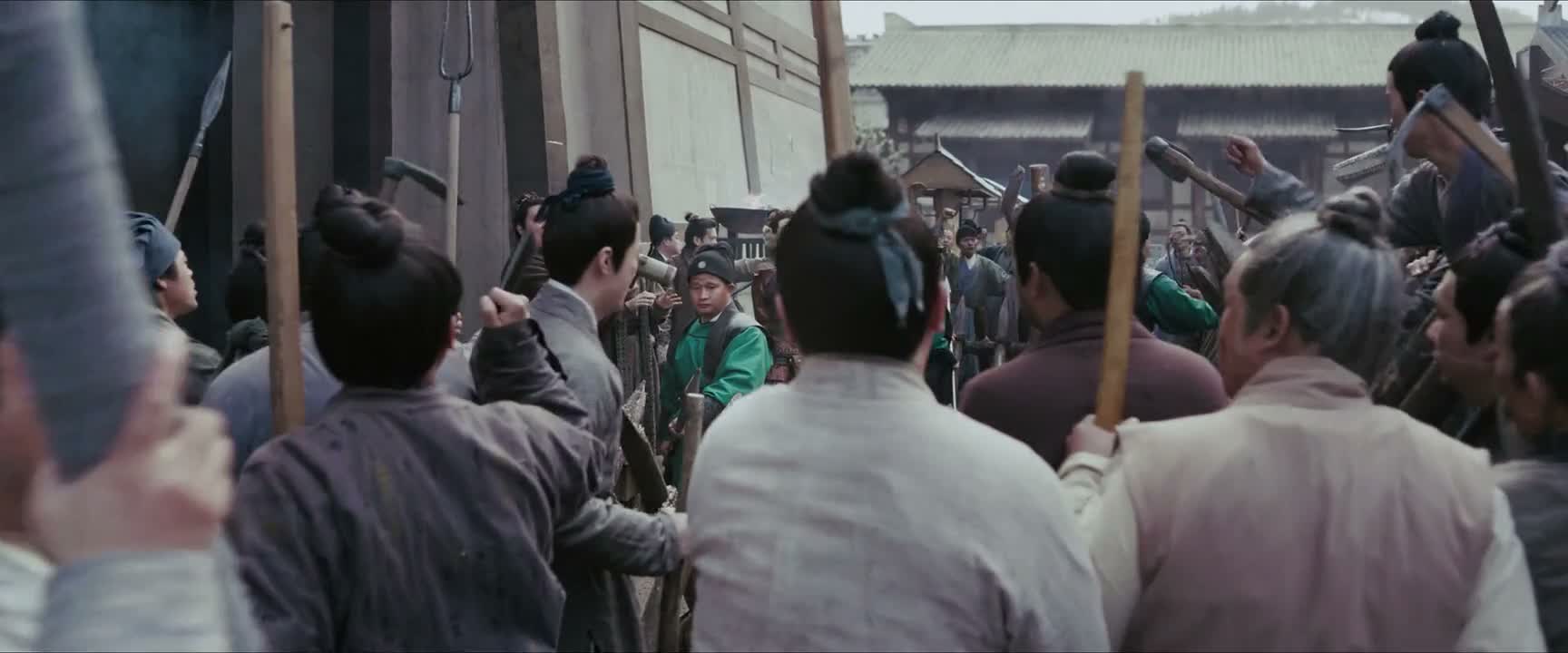
让开 你是不是喝多了 清醒得很
“Move aside. Are you drunk? I'm perfectly sober.”
THE DIALOGUE REEL
让开 你 是不是 喝多了 清醒得很
“Move aside. Are you drunk? I'm perfectly sober.”
“Move aside! Don't make us force you to.”
“Back off! I know exactly what I am doing, and you have no right to stop me.”
Asking someone if they are drunk or crazy ('喝多了') is a common rhetorical strategy in Mandarin to delegitimize their authority or actions during an argument.
LEARNING CHUNKS & PARTICLES
had too much to drink; drunk
A very common spoken euphemism used to describe drunkenness or to question someone's irrational behavior.
sober; clear-headed
Used to describe a state of awareness, both literally (not drunk) and figuratively (making sensible decisions).
Marks an excessive state in '喝多了' indicating that a threshold of drinking has been crossed.
VOCABULARY & EXPRESSIONS
Parallel Spoken Cinema Scenes (语义近邻切片)

“Get off me. I can't take it anymore. What are you doing?”

“Move! Give him to me! Just run them over!”

“Move aside! No!”

“Go away! I just want to see Gao Qiqiang! What's wrong with this young guy?”

“Move. Move aside.”
“Move! Move!”