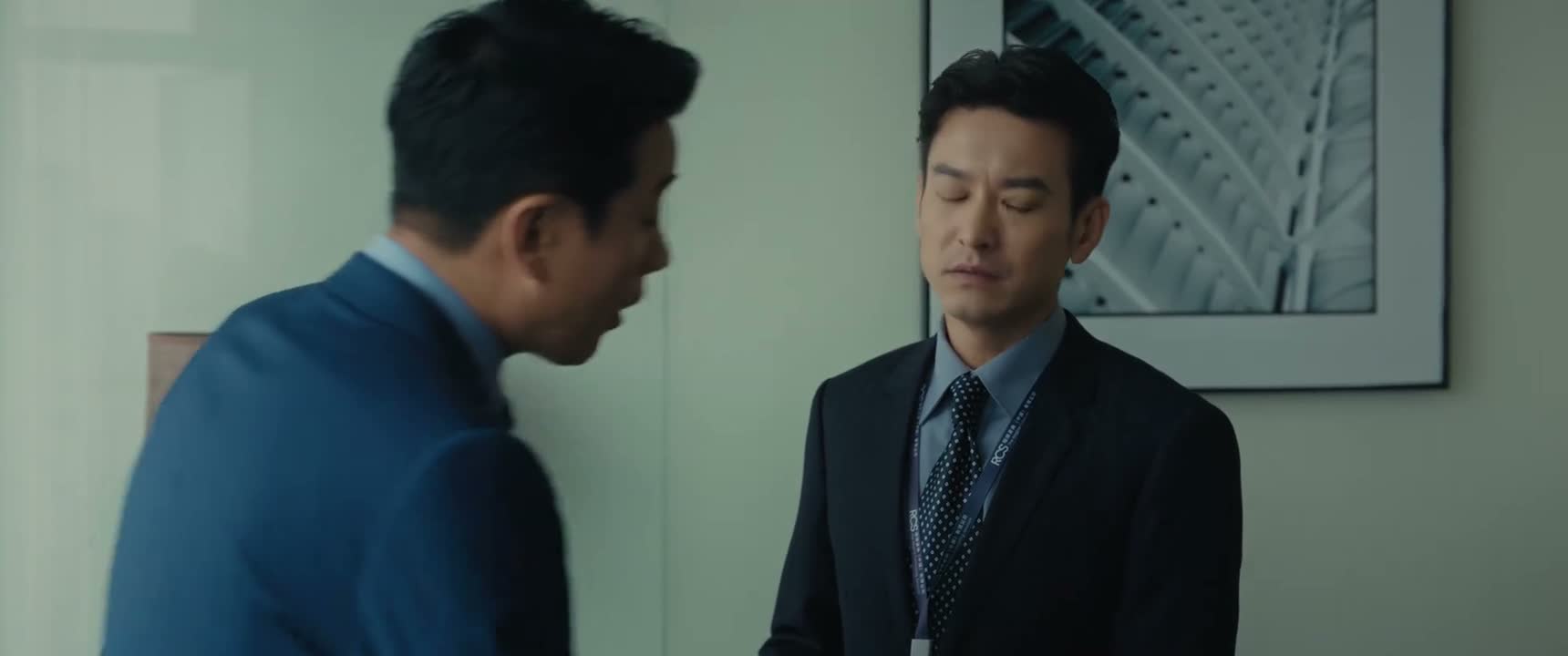
咱俩不是说好了吗 你怎么把小陶给开了呢
“Didn't we have a deal? Why did you fire Tao?”
THE DIALOGUE REEL
那我等您微信
“Alright, I'll wait for your news.”
咱俩 不是说好了吗 你 怎么 把小陶给开了呢
“Didn't we have a deal? Why did you fire Tao?”
急什么
“Don't worry.”
“We had an explicit deal, so why did you go behind my back and fire them?”
In Chinese interpersonal work dynamics, breaking a private verbal consensus severely damages mutual trust and collegial harmony.
LEARNING CHUNKS & PARTICLES
agreed upon; settled
Used to remind someone of a verbal promise or mutual consensus that was already reached.
got fired; laid off
A common colloquial slang for terminating someone's employment, equivalent to 'canned' or 'sacked'.
Forms a rhetorical question highlighting the contradiction between past agreement and present reality.
Heightens the interrogative pressure, demanding an immediate explanation.
VOCABULARY & EXPRESSIONS
Parallel Spoken Cinema Scenes (语义近邻切片)
“Everyone in our team knows Tao's performance was the worst.”

“Out with it. Who is Tao to you?”

“Didn't we agree to it?”

“♪ The stars flow across the sky, and I walk this road with you ♪ didn't we already make a pact in the very beginning? ♪ From strangers, our hearts slowly grow close ♪”

“We had a deal.”

“I discussed it with Jiale today”