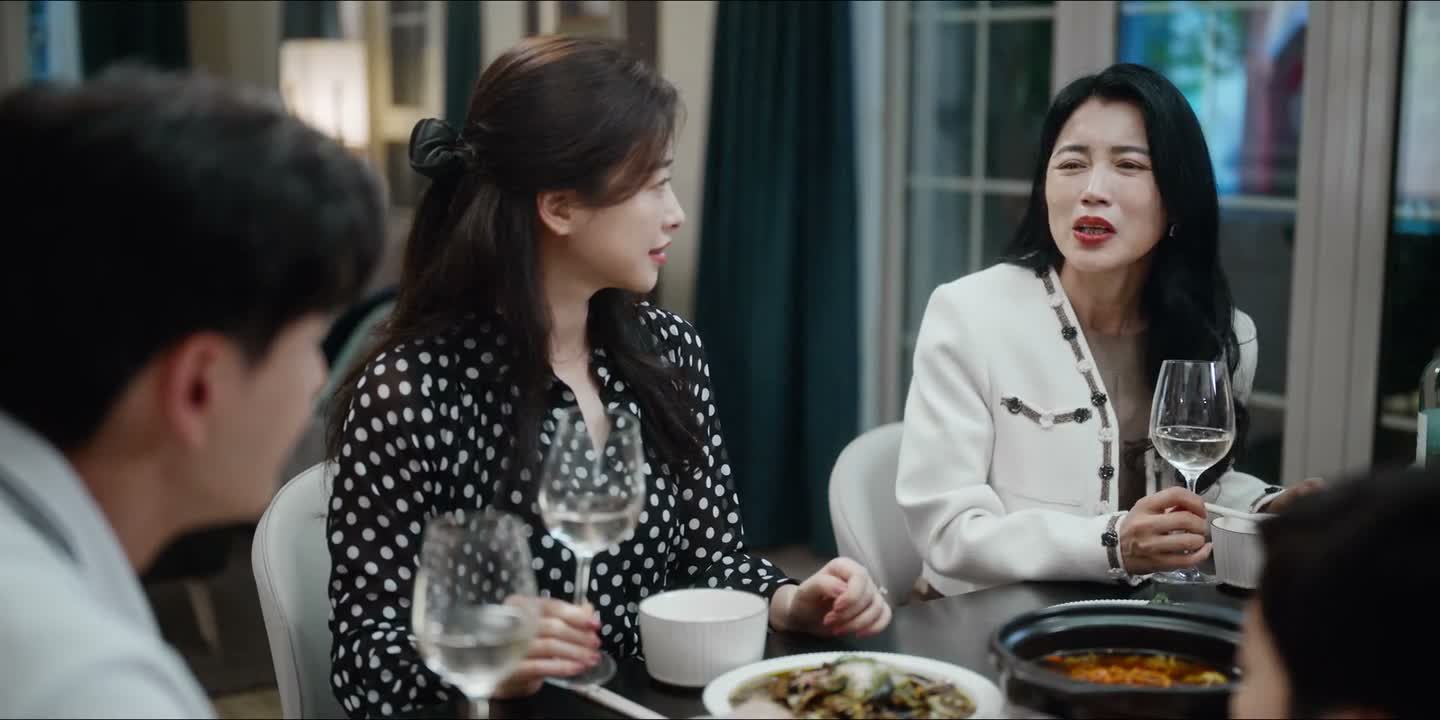
今天又麻烦你们了 不好意思
“I've caused all of you trouble again. Sorry.”
THE DIALOGUE REEL
来
“Come on.”
今天 又 麻烦你们了 不好意思
“I've caused all of you trouble again. Sorry.”
没事 应该的
“It's fine. It's what we should do.”
Direct spoken expression in this communicative setting.
Acknowledging the trouble you cause someone else is essential etiquette in Chinese interpersonal interactions to avoid appearing entitled.
LEARNING CHUNKS & PARTICLES
sorry to trouble you all / thank you for your help
The standard polite formula used when someone performs a favor or service for you.
excuse me / sorry to bother
A versatile mild apology used to soften interactions and show modesty.
Marks the completed state of having caused trouble, anchoring the polite formula.
VOCABULARY & EXPRESSIONS
Parallel Spoken Cinema Scenes (语义近邻切片)
“we've troubled you again.”

“Sorry for causing you trouble again.”

“I didn't expect it to become a trouble for you.”

“Thank you very much. You're welcome.”

“I caused you so much trouble. I'm so sorry.”

“You... -I'm sorry. -It's OK.”

“Sorry for causing you trouble this time.”