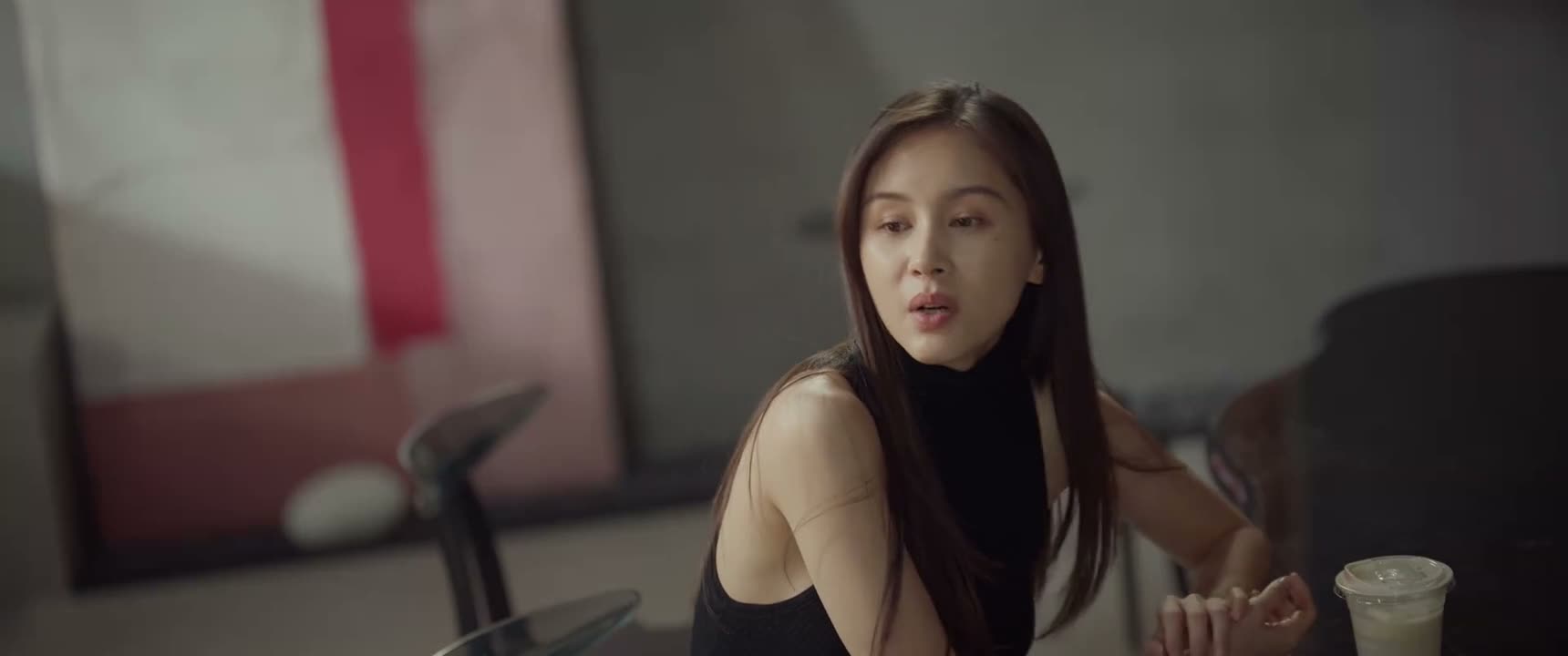
不好意思啊 我也没太清楚 到底是什么情况
“I'm really sorry. I'm not quite sure what's going on either.”
THE DIALOGUE REEL
林小姐 这
“Miss Lin, what is this?”
不好意思啊 我也 没太清楚 到底是什么情况
“I'm really sorry. I'm not quite sure what's going on either.”
我晚一点给你回电话 你回去吧 挺忙的
“I'll call you later. You should go. You look busy.”
“Stop asking me; I cannot or will not tell you right now.”
Claiming ignorance ('I am not clear either') is a common Chinese workplace tactic to protect oneself and avoid taking a side in sensitive matters.
LEARNING CHUNKS & PARTICLES
sorry / excuse me
A polite, conversational apology used to soften bad news, refusals, or evasions.
what the situation actually is
Commonly used when trying to pinpoint the truth or core details of a confusing event.
Softens the initial apology to maintain a polite and non-confrontational demeanor.
VOCABULARY & EXPRESSIONS
Parallel Spoken Cinema Scenes (语义近邻切片)

“I'm not so sure. I'm sorry, sir. Is there anything else I can help you with?”

“Not feeling well? I know you're not feeling well. Be good.”

“Sorry. I'm flying business class. We're not even at the same counter.”

“Sorry. We haven't seen this place so lively for a while.”
“Sorry to keep you waiting.”
“Sorry, I was tied up just now.”

“Sorry. What brings you here? Sorry about that.”

“Sorry, it's an occupational hazard.”

“Sorry, Wanzhi. I actually didn't have time to get one.”

“Sorry about this. You just wait. What?”

“I'm really sorry. That's just how my job is.”

“I'm sorry. She's old.”

“I'm sorry about this accident.”

“I'm sorry. Is it too sudden?”

“Sorry about that. Both my parents are teachers, so they tend to talk a lot.”

“I'm sorry. My son is spoiled. Thank you.”

“Sorry. I'll be leaving soon.”

“Sorry, I'll just... It's fine.”

“Sorry. I'm really anxious,”

“Sorry, I got the wrong room.”
“I'm sorry, but my wife hasn't been feeling well recently,”
“I'm sorry to trouble you with that.”
“Sorry, do I know you?”