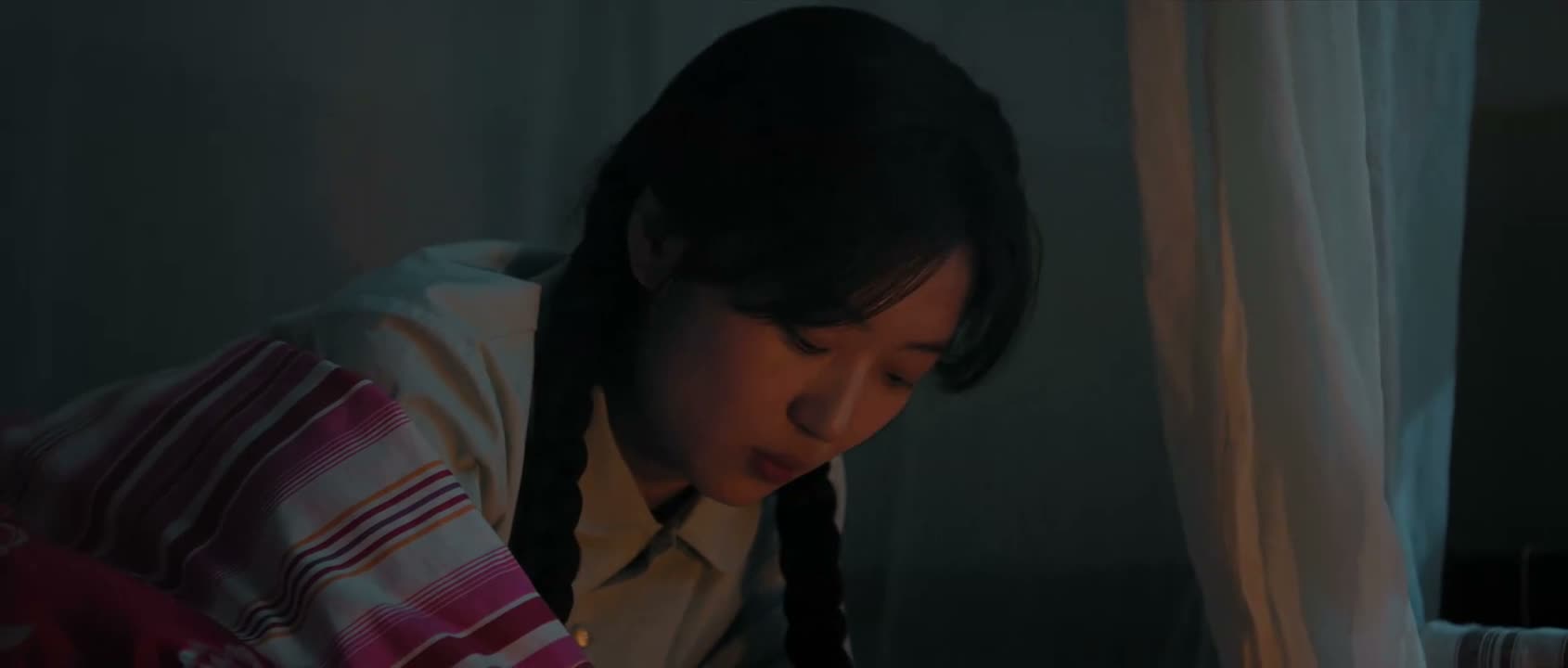
他心情不好能跟我说对不起吗
“He never apologizes to me if he's in a bad mood.”
THE DIALOGUE REEL
“W-Why would you say that? He's been in a good mood lately.”
他 心情不好 能 跟我说 对不起 吗
“He never apologizes to me if he's in a bad mood.”
“Well, he does have an appointment later.”
“He would never apologize to me if he was genuinely grumpy; something else is going on.”
Among familiar Chinese peers, excessive politeness or unprompted apologies can be viewed as an anomaly signaling underlying psychological changes.
LEARNING CHUNKS & PARTICLES
in a bad mood
The most natural and common spoken phrase to describe being upset or irritated.
say sorry / apologize
A basic conversational collocation meaning to offer an apology.
Forms a rhetorical question expecting a negative answer.
VOCABULARY & EXPRESSIONS
Parallel Spoken Cinema Scenes (语义近邻切片)

“I can also help carry your negative emotions.”

“so I could apologize to you in person.”

“will now... Sorry.”

“I should apologize to you.”
“I feel like I've let you down.”

“I'm the one who should say sorry.”

“I'm truly sorry.”