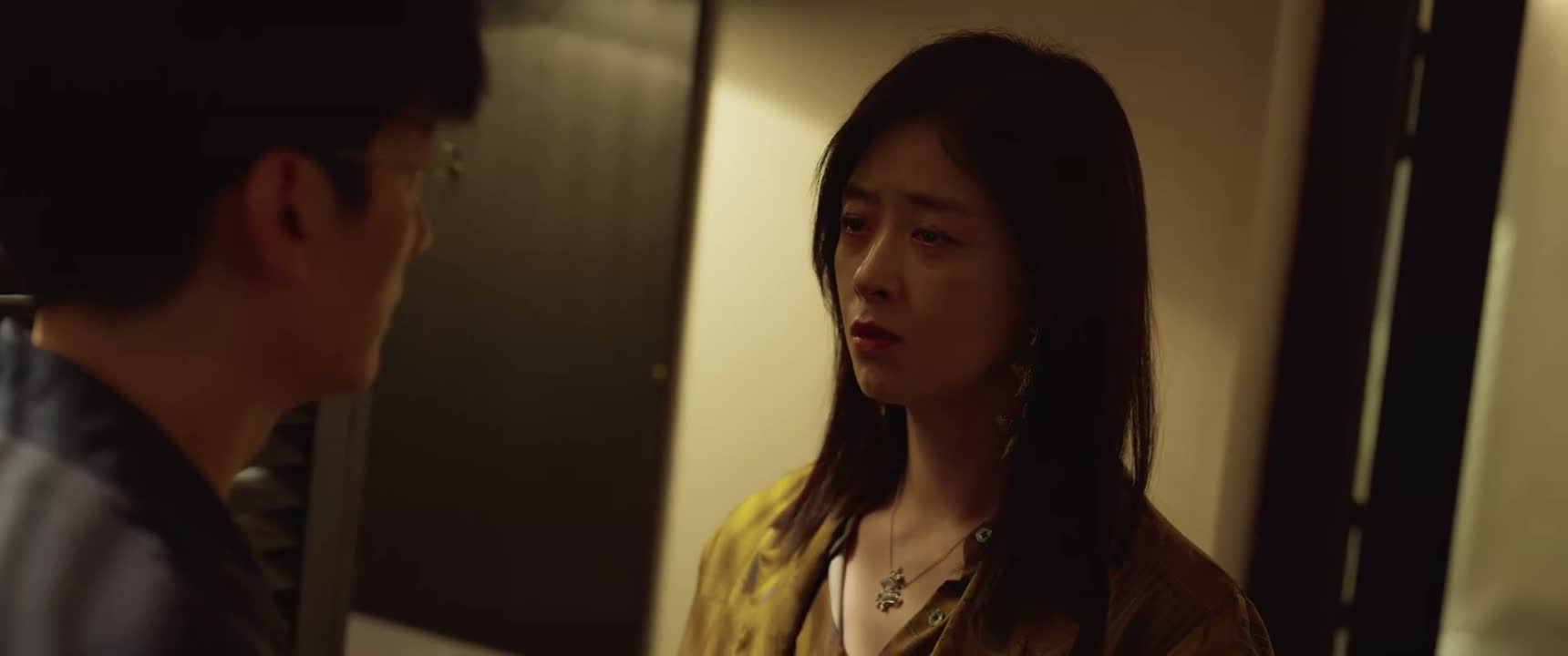
我真的很厌恶你
“I genuinely despise you.”
THE DIALOGUE REEL
墨景黎
“Mo Jingli,”
我 真的很 厌恶你
“I genuinely despise you.”
所以你离我远一点
“So stay away from me.”
Direct spoken expression in this communicative setting.
Chinese social norms strongly favor face-saving ambiguity; directly voicing intense disgust indicates an absolute, irrevocable rupture in social relations.
LEARNING CHUNKS & PARTICLES
to loathe / to detest / to feel deep disgust towards
A strong verb conveying deep psychological revulsion, much more severe and formal than basic dislike (不喜欢).
stay away from me / keep your distance
A sharp, unequivocal boundary-setting command used when completely rejecting someone's presence.
VOCABULARY & EXPRESSIONS
Parallel Spoken Cinema Scenes (语义近邻切片)

“I really despise you.”

“I hate when you play the appeaser.”

“you dislike us so much.”

“why you loathe me?”
“I hate it when you get all preachy and serious.”

“- [Cunningham] Mm. - But I hate it. Makes me feel like an invalid.”

“and loathe as I am to admit it,”

“You're annoying! Why do you always upset me?”

“But I despise people who collude in wrongdoing.”

“was just unbearable.”

“I should have hated you.”

“Actually, I should have hated you.”

“The whole world hates me.”

“and despised scheming and currying favor.”

“How could you possibly hate me?”

“and he completely denied me! Your stupidity disgusts me!”

“Do you hate me as well?”

“Therefore, I hated my name.”

“Sometimes, I really hate you.”

“I also hate the way I am now.”

“She hates us very much.”