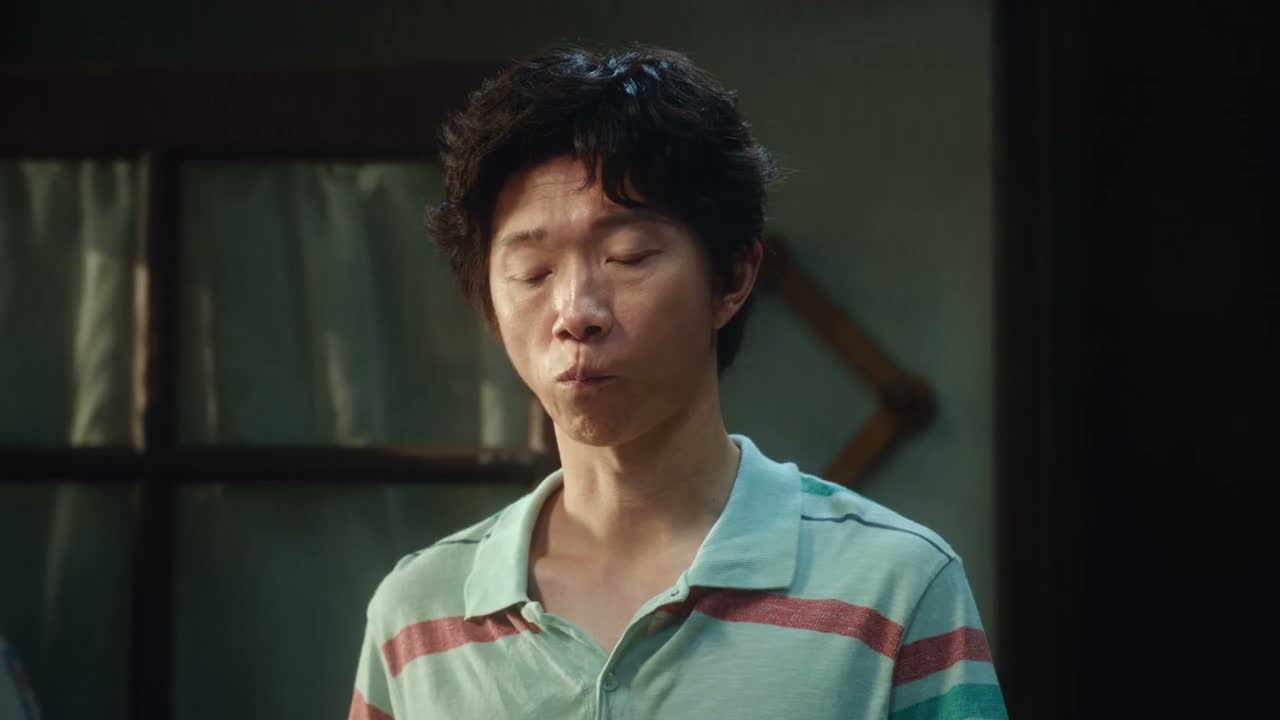
不是走的时候给你带新的了吗
“Didn't I give you new ones when you left?”
THE DIALOGUE REEL
还穿着这身衣服呢
“And still wearing these clothes?”
不是 走 的时候 给你带 新 的 了吗
“Didn't I give you new ones when you left?”
晓亮今天还念叨呢
“Xiaoliang was just saying he wanted you to take him to the exhibition.”
“Why are you still wearing old clothes when I made sure to pack fresh ones for you?”
In Chinese domestic culture, familial care and love are frequently communicated through mild scolding and rhetorical complaints about personal care.
LEARNING CHUNKS & PARTICLES
didn't [subject] already...?
A rhetorical pattern used to remind someone of a previous action or arrangement.
at the time of leaving; when departing
Common temporal phrase used to set the context of departure.
Indicates the completion of packing the clothes.
Turns the statement into a rhetorical question to prompt reflection.
VOCABULARY & EXPRESSIONS
Parallel Spoken Cinema Scenes (语义近邻切片)

“Why are you still here?”

“Didn’t we agree before you set off?”

“Why did you buy new ones? No need.”

“to bring it for you directly.”

“As you asked, I got you a new one. The paperwork is all done.”
“the old ones leave and no new ones come.”