还得是
hái dé shìCommon spoken expression used by native Chinese speakers in daily life.
[Scene: 职场工作]
(10 clips) 00:02
 00:02
 00:02
 00:02
 00:03
(前辈有点危机意识是正常的) ── Previous context
“Alright, Shen Xiezhi. Only you could pull that off.”
 00:02
 00:03
(还是有点东西 多谢夸奖 我会继续提升自己) ── Previous context
“I will continue to improve myself to provide you with better services. You rock, LM.”
 00:03
(朋友们 何韩老师请大家喝奶茶 来来来 还有甜品) ── Previous context
“- From Mr. He Han. - Here. It has to be Mr. He Han. Come. Here.”
 00:03
 00:03
(来 来 快走 快走 郑书记 大家先离开这里) ── Previous context
“Only you could handle such a big scene. Look at this situation today.”
[Scene: 社交聚会]
(9 clips) 00:03
 00:02
 00:03
 00:03
(黑白那个丝巾给我 好嘞) ── Previous context
“Mrs. Gao. Now you know what a good wife is like.”
 00:02
 00:03
(失陪) ── Previous context
“Only Hu Xiu could have gotten you out of there. Otherwise, who knows”
 00:03
 00:02
 00:02
[Scene: 其他场景]
(6 clips)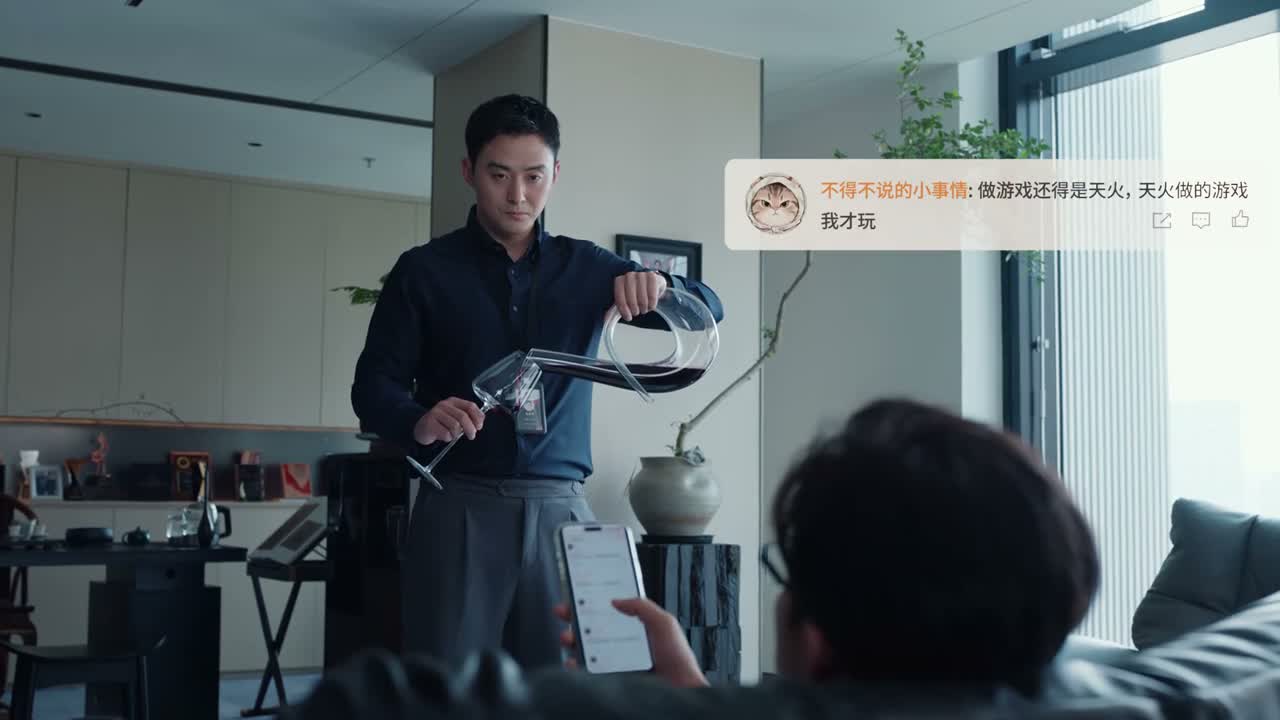 00:03
(回头是岸什么玩意儿 这游戏给我免费我都不玩) ── Previous context
“(Sky Fire is the best at developing games.) (I'll only play games developed by Sky Fire.)”
 00:03
(好) ── Previous context
“-This hits the spot. -7, 8, 9, 10, 11. Nothing like an iced tea after a match.”
 00:02
 00:02
 00:02
 00:02
(对对对 对 打一针啊 就相当于吃一百个鸡蛋) ── Previous context
“College grad, wonderful. Plain talk.”
[Scene: 家庭日常]
(5 clips) 00:02
 00:03
(没事 就让我这个 贴心小棉袄来温暖你吧) ── Previous context
“♪ There may also be regrets ♪ Xiaolan is the best. ♪ If you lose something, be strong ♪ It's better to have a daughter.”
 00:02
 00:02
 00:03
(慢点啊妈) ── Previous context
“(She may cause trouble sometimes.) (But in the end, I have to count on her.)”
[Scene: 其他场景]
(1 clips) 00:02
[Scene: 餐饮美食]
(1 clips) 00:02
📌 别生气了
→Nuance: 同为安慰劝解,意图一致
📌 没事
→Nuance: 同为安慰劝解,意图一致
📌 来来来
→Nuance: 同为夸赞某人运气好
📌 你看看
→Nuance: 均表扬认可晓兰贴心懂事
📌 不好意思
→Nuance: 同向近义词根配对: [我们 ↔ 咱们]
📌 姐
→Nuance: 同向近义词根配对: [我们 ↔ 咱们]
📌 是不是
→Nuance: 同向近义词根配对: [我们 ↔ 咱们]