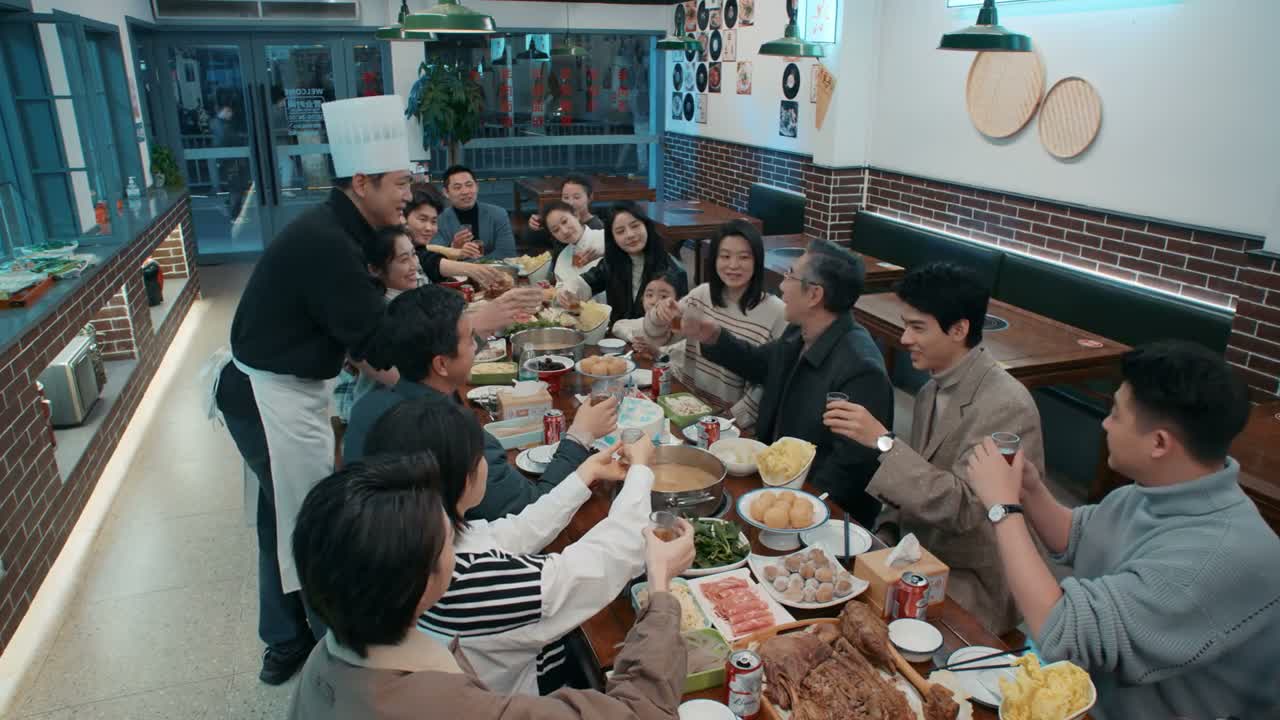
干杯
gān bēiCommon spoken expression used by native Chinese speakers in daily life.
[Scene: 餐饮美食]
(30 clips) 00:03
 00:02
 00:03
(来) ── Previous context
“To our honorable retirement. -Come on. -Cheers to losers.”
 00:03
 00:02
 00:02
 00:03
 00:03
(要歇一歇) ── Previous context
“So I came all the way for nothing, not even a drink. Cheers.”
 00:02
 00:03
(兄弟们 来来来 难得我们今天这么开心) ── Previous context
“Let's have a toast, shall we? Come on! - Cheers! - Cheers!”
 00:02
 00:02
(希望你们都顺顺利利 越来越好 谢谢 来) ── Previous context
“-Ever-improving days ahead. -Ever-improving days ahead. Cheers.”
 00:02
(喝一个喝一个 来 干杯 来 碰一个) ── Previous context
“Cheers! Come, the one who came here to see Mingyue. Come!”
 00:02
 00:02
 00:02
(月海印刷 靠我们了 好 好嘞 干杯 干杯 干杯) ── Previous context
“- Cheers! - Cheers! Get rich! - Cheers! - Cheers! Get rich!”
 00:03
(咱们可以先从情人峰开始 行啊哪天呗 咱一起去) ── Previous context
“Okay. Come on. Thank you. -Here. -Thank you. Cheers.”
 00:02
 00:02
 00:02
 00:02
 00:03
 00:03
 00:02
 00:02
 00:02
 00:02
 00:02
 00:03
(我们是彼此的依靠 是一起向前奔跑的伙伴) ── Previous context
“Here's to making big money together! -To making big money! Cheers! -Cheers!”
 00:03
[Scene: 社交聚会]
(3 clips) 00:02
 00:02
 00:03
📌 来来来
→Nuance: 加入商量语气,表达更委婉客气
📌 来来来
→Nuance: 酒席碰杯用语完全一致
📌 姐
→Nuance: 加客套词请,表达更礼貌客气
📌 姐
→Nuance: 同为热烈祝酒劝饮,意图一致
📌 敬你一杯
→Nuance: 祝酒核心意图一致可替换
📌 祝贺你
→Nuance: 同向近义词根配对: [庆祝 ↔ 祝贺]
📌 谢了
→Nuance: 同向近义词根配对: [谢谢 ↔ 多谢]
📌 加油
→Nuance: 祝福加劲表达类似祝酒意图
📌 是吗
→Nuance: 酒桌劝酒干杯,意图完全一致
📌 不是
→Nuance: 抱怨白跑一趟连水/酒都没得喝